How to Sell to Doctors: 3 Modern Fundamentals + Bonus Interview Insights
Every industry and persona is different, but understanding how to sell to doctors takes particular nuance. When your target market - doctors, nurse practitioners, and PAs - put patient care first, success hinges on blending medical expertise with current digital realities: Like telehealth use in over 40% of visits and AI being adopted by healthcare orgs at 2.2x the rate of the rest of the economy.
This guide, drawn from interviews with a primary care physician (who sees at least five reps a week!), a pharma specialist, an orthopedic device pro, and an animal health sales rep, distills timeless strategies updated for modern hybrid selling.
So let’s dive in and find out how to sell to doctors!
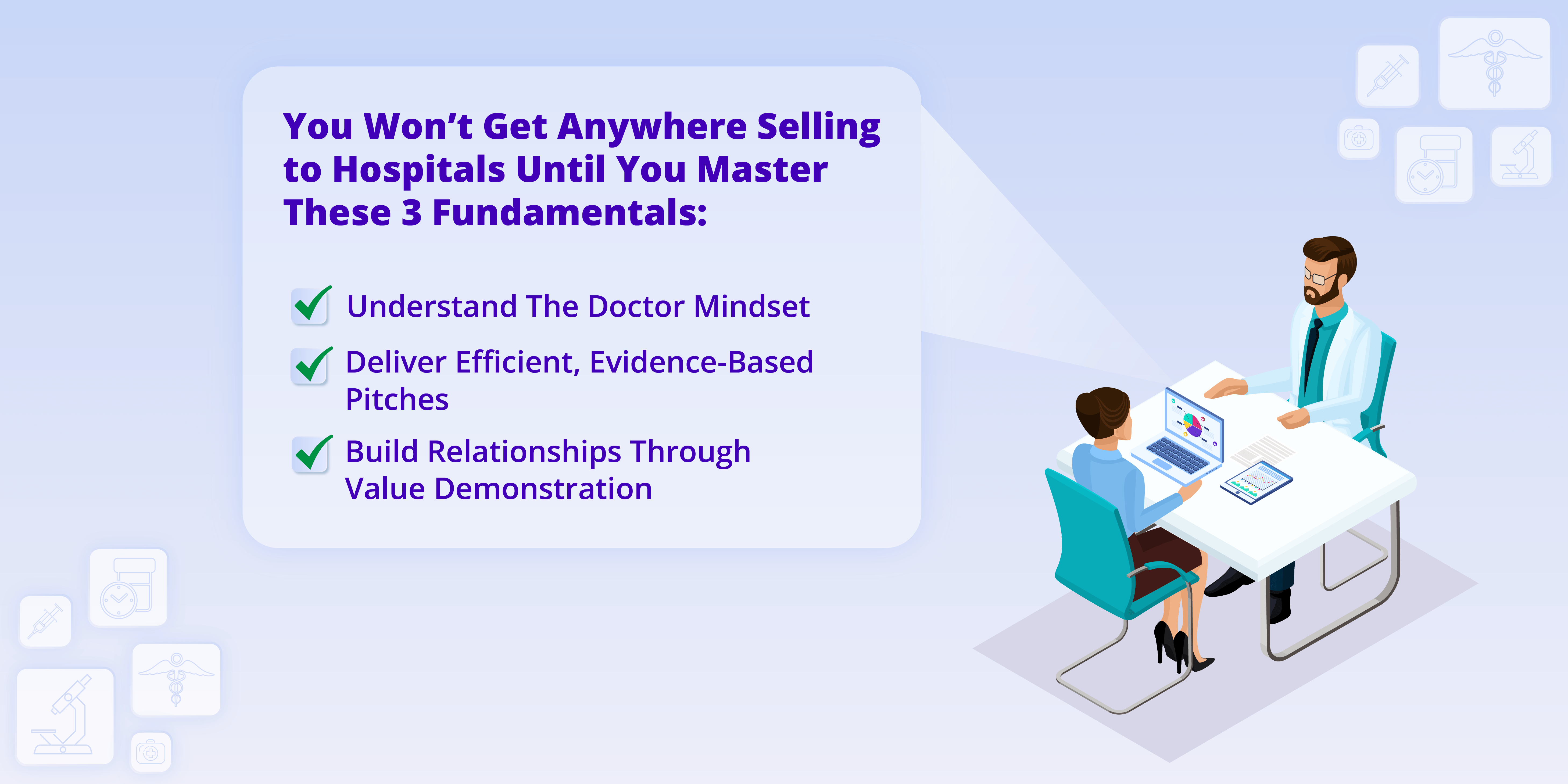
Fundamental 1: Master the Doctor’s Mindset and Priorities
So many industries share sales overlaps - if you can sell to an automotive store, you can likely tackle a beverage distributor. But while selling to doctors draws on classic fundamentals like building rapport, other timeless “rules” flip entirely in this high-stakes arena, where decisions hinge on lives, not just lines.
The first step? Decode the physician’s mindset and drivers: Unlike typical B2B sales prioritizing cost or efficiency, doctors zero in on patient care.
The Patient-First Mentality
For any kind of sales success in this field, you MUST understand - doctors assess products through the lens of patient benefit. In your pitch to doctors, position yourself as a partner in precision medicine. B2B sales is normally about maximizing ROI, and in the medical industry it’s similar but nuanced - your offering must link directly to enhanced patient outcomes.
For instance, pitching a surgical device? Emphasize AI-optimized reduced recovery times or 20% fewer complications via real-time monitoring. For a pharmaceutical, spotlight minimized side effects or elevated quality of life. Because nowadays, over 60% of healthcare organizations now adopt innovations based on physician requests tied to clear clinical gains, up from pre-2020 levels due to value-based incentives.
Time Constraints & Accessibility Challenges
While doctors’ schedules have always been tight, in-person interactions with doctors now average 2-4 minutes - down from the pre-pandemic 3-5 minutes - while virtual calls extend to an average of 5-10 minutes. Preparation and brevity are non-negotiable.
Pre-meeting, leverage modern tools to research the doctor’s specialty, patient demographics (e.g., aging populations in rural areas), practice size, current tech stack, and pain points like telehealth or AI integration. An orthopedic surgeon with elderly patients prioritizes mobility aids differently than a pediatrician focused on virtual pediatric consults.
In hospital systems, navigate multiple stakeholders: Value Analysis Committees (VACs), procurement, and admins (and sometimes the IT department for AI & cybersecurity!). Identify champions early via LinkedIn or CRM data.
Evidence-Based Decision Making
Another thing that sets doctors apart from other buyers is their genuine appetite for context and evidence; after all, they've invested over a decade in med school, residencies, and fellowships honing skeptical, data-hungry minds that demand more than hype. Physicians ground choices in evidence-based medicine (EBM), drawing on research, expertise, and patient input.
Thus, your sales materials demand rigorous backing: peer-reviewed studies, FDA approvals, real-world evidence from AI analytics, and outcome metrics. Discuss study designs, AI biases, and clinical relevance confidently. Doctors value reps who share balanced views, including limitations and ethics.
Cultural & Regional Healthcare Nuances
Healthcare landscapes differ by region and type. Generally, urban teaching hospitals are chasing AI innovations, while rural practices emphasize proven, affordable telehealth-compatible tools to bridge access gaps - addressing disparities that widened during the pandemic. In diverse settings, address equity - for example, culturally sensitive pharma dosing for multicultural patients.
Tailoring to these regional nuances fosters trust across U.S. and global markets, from CMS-driven value care to international reimbursement models.
Fundamental 2: Deliver Evidence-Based, Time-Efficient Pitches
Normally, reps avoid feature-vomiting when pitching their product - it's a classic no-go. But as we've seen, selling to doctors often flips the script: Thus, the second pillar of selling to doctors is crafting concise, evidence-packed pitches that honor doctors’ expertise and limited time in hybrid formats.
The 2-Minute Value Proposition Rule
You now have about 2 minutes (in-person) or 5 minutes (virtual) to hook a physician and convey value - a stretch from the old 90-second in-person rule that no longer fits our fast-paced digital reality. It makes sense to lead with the most compelling, relevant hook.
Begin with patient wins, segue to evidence, then economics. Example: “For your diabetic patients struggling with adherence, this smart insulin pen auto-adjusts doses via AI, cutting hypoglycemic events by 35% and A1C levels by 1.2 points in a 2024 NEJM trial - while slashing refill visits by 40%, easing your clinic's no-show burden.” This aligns with outcomes doctors love to champion.
Follow with tech specs, seamless integration or implementation (e.g., EHR plug-ins), and/or ROI amid inflation pressures.
Leveraging Digital Tools & Clinical Data
You'll want to arm your reps with tablets, AR/VR demos, and relevant AI platforms to make your pitches feel alive and interactive - gone are the days of static slides. These types of tools give you instant access to the latest studies, tailor-made procedure simulations powered by GenAI just for that doctor's specialty, and real-world case studies that hit home.
In the moment, use sentiment analysis apps to read the room (or the Zoom) and pivot on the fly to what lights up the physician's interest. And always keep it legit: Back everything with solid citations and stick to HIPAA-compliant sharing so your medtech reps come across as pros who respect the rules.
Competitor Analysis & Product Knowledge
Get your team to own their product inside out - and know the competition like the back of their hand, because doctors will grill you on head-to-head matchups. When they ask, "How does this stack up?" be ready with honest, no-BS breakdowns, even admitting when a rival can do something better.
Position your reps as that go-to advisor: Highlight the clinical wins, how it slots seamlessly into their workflow, and the easy hospital rollout. Do this right, and you'll lock in that "trusted partner" vibe that turns one pitch into a long-haul relationship.
Do’s and Don’ts During the Sales Call
| DO | DON'T |
|---|---|
| Research practice, prescribing, and telehealth use via AI prospecting tools to personalize. | Launch into sales in clinical chaos; gauge timing first. |
Steer hybrid convos efficiently back to value. | Presume familiarity; layer from basics to AI-advanced features. |
Counter objections with fresh evidence, like current-year trial data. | Bombard with queries; prioritize need-clarification. |
End with async follow-up videos for busy schedules. | Ignore support staff in virtual intros - give genuine greetings to all. |
Fundamental 3: Build Long-term Relationships Through Value Demonstration
Doctors are more like cats than like dogs - they are wary and slower to trust, but once you earn that trust, it’s like a flip switches and you’re part of the pride. Bottom line: Medical sales thrives on trust, nurtured via patience, consistency, and patient-centric commitment in a digital-first era.
The Extended Adoption Timeline
Sales cycles demand multiple touches: 7-10 interactions on average before adoption! Luckily this is shortened via modern tools from the old 10+ in-person hurdles, but it’s still 9-12 months for devices. Prioritize education over quick closes. Supply ongoing value: modern curated research, virtual CE sessions, and workflow hacks.
Over time, position your team as that indispensable go-to resource, fostering peer networks through LinkedIn or other relevant groups where docs swap war stories and spot trends before they hit the journals. Do this, and those early "maybe later" chats evolve into "Hey, what do you think about this?" loyalty.
Hospital Systems & Vendor Credentialing
When you're selling to hospitals, it’s a lot more like selling to a large corporation than it is about chatting with a single, authoritative decision-maker - think Value Analysis Committees (VACs) grilling on clinical ROI, procurement haggling over contracts, legal vetting for compliance, IT department asking about cybersecurity, and credentialing hoops that feel endless.
Empower your reps to forge those all-important ties early: Start with casual LinkedIn connects to VAC members, sharing a neutral whitepaper on industry benchmarks to spark dialogue without the pitch. Once inside, team up with OR schedulers for hands-on hybrid training - maybe a quick VR sim session that shows how your device slots into their chaos without disrupting a single surgery. It's these thoughtful bridges that turn bureaucratic mazes into collaborative wins, making your solution the one they advocate for in the boardroom.
Economic Benefits & Flexible Solutions
Sure, patient outcomes are the heart of pitching to doctors, but let's be real - finances are never ignored, and in this era’s squeeze of value-based reimbursements and sticky inflation (way tougher than those cushy pre-2022 budgets), docs and admins need to see the dollars stacking up before they bite. Your reps’ pitches must involve crystal-clear ROI stories, not vague promises.
Showcase it smart and demo tangible savings - like how your solution trims average hospital stays by two days (hello, $5K per case) or boosts procedural efficiency to free up OR slots for revenue-generating add-ons. Then sweeten the pot with flexible options that fit their world: Offer no-risk trials with easy opt-outs, leasing plans that sync to quarterly fiscal cycles, or bundled payments that bundle in training and support. Frame it as partnership, not push: "This isn't just cost savings - it's reclaiming time for the patients who need you most." Nail this, and you'll convert skeptics into champions who are happy to refer you to their peers.
Overcoming Objections
Like I mentioned earlier, doctors are a warier type and tread carefully - they know their decisions can dramatically ripple out to patient health and operations.
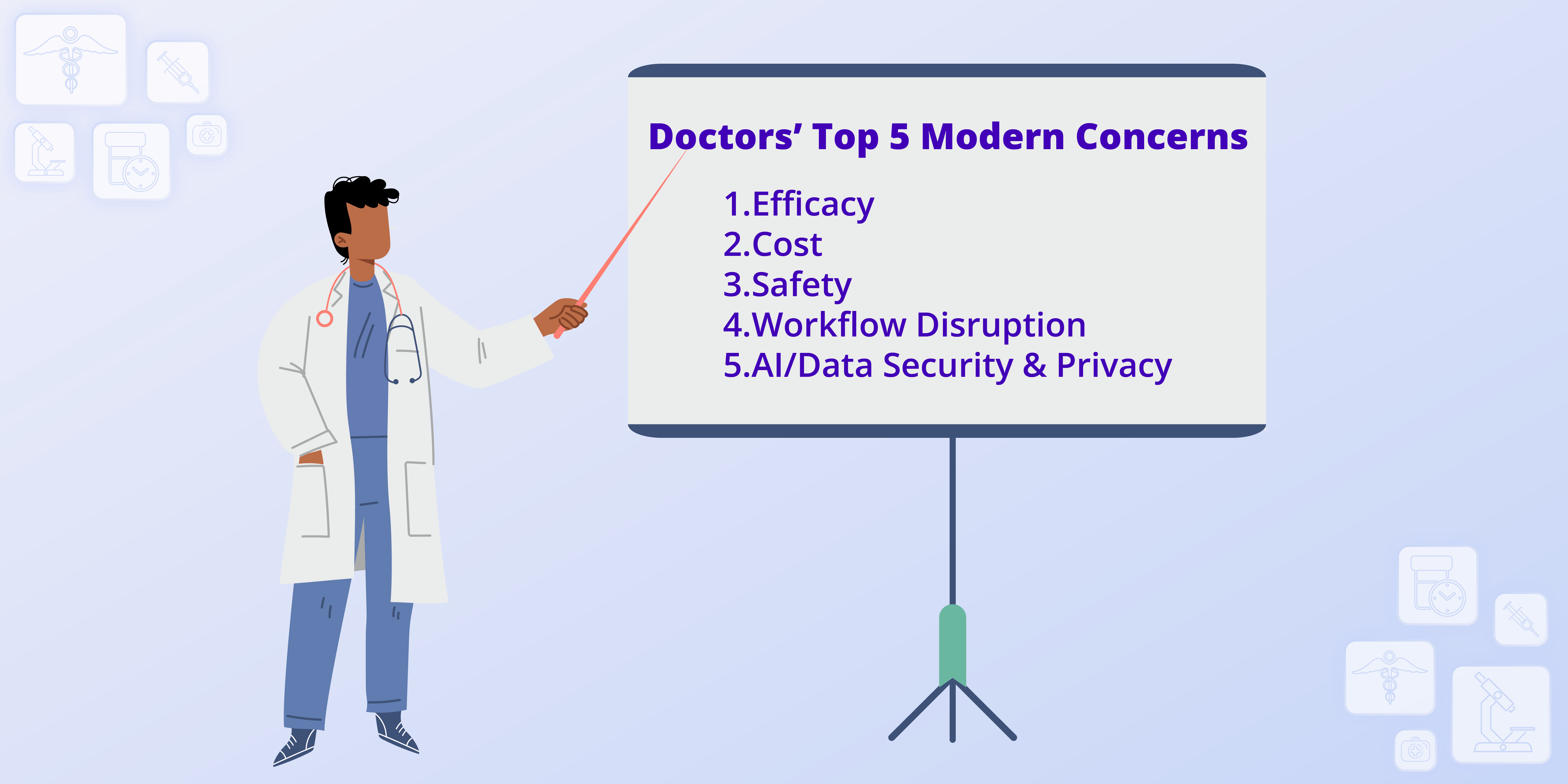
When polled, our medical sales interviewees identified the top five modern concerns: efficacy, cost, safety, workflow disruption, and AI/data security & privacy - evolving from pre-digital fears of just efficacy and cost.
Meet with empathy and proof. Be ready for queries as specific as 'How does this integrate with my EHR without breaches?' For costs, doctors generally think long-term, so tout long-term savings via credible forecasts. Listen, clarify, and evidence-validate to forge trust as a steadfast ally.
Doctors’ Top Five 2026 Concerns
Understand these concerns and you’ll understand where 99% of doctor objections are coming from. From there, you’re able to easily adapt your sales approach and pitch accordingly.
Pharma vs. Medical Devices: Key Differences in Selling to Doctors
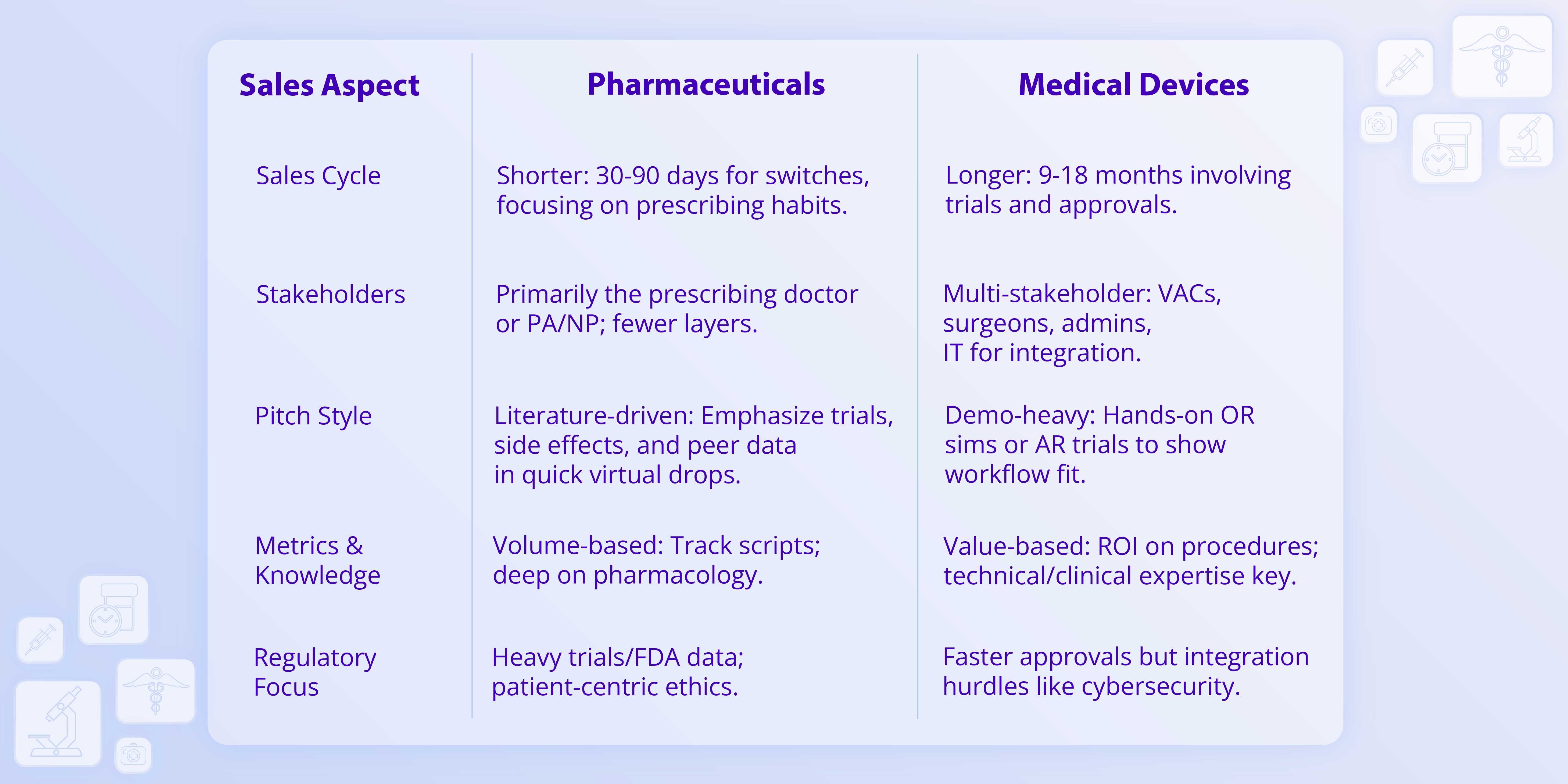
Sure, they’re all doctors, but selling pharma vs medical devices have noticeable differences. Navigating how to sell to doctors varies sharply by product type - pharmaceuticals demand rapid, science-heavy rapport, while medical devices require hands-on demos and committee navigation.
You must tailor your approach appropriately. Here's a general breakdown:
BONUS: Tips & Interview Insights from Healthcare Sales Professionals
Our three seasoned reps - one ortho, one pharma, one animal health - and our primary care physician share real-world insights beyond textbooks.
Treating Doctors as Professional Students
Doctors crave lifelong learning. We’re in the AI-era, so frame your relationship as educator-partner in cutting-edge advances.
Our interviewed orthopedic rep noted, “Already in this day and age, reps need to be AI-fluent. Doctors seek insights on trends, like predictive diagnostics and other cutting edge stuff. Also, stay on top of journals.”
Building Relationships with Support Staff
Sales reps experience it in other industries, but it’s especially prevalent when selling to hospitals: The staff absolutely gatekeeps access and sways uptake. Gauge their office culture, and cultivate your relationship via respect and utility. If need be, shift from old-school lunches to virtual resource shares that fit remote teams.
The pharma rep we spoke to advised, “Host virtual office hours or resource drops for nurses - they flag telehealth pain points and champion inclusive reps.”
Social Energy & Thick Skins
“It’s hard always being ‘on’,” admits the pharmaceutical rep, “you’re expected to maintain a professional attitude, an upbeat attitude, and an empathetic attitude at all times, and it can seriously be exhausting, especially for introverts like myself.”
In addition, you’ve got to learn not to take things personally “and expect a degree of disrespect that can come out of nowhere for just doing your job.”
What Tools Are They Using?
Digital channels dominate healthcare professional engagements - 80% of sales interactions between suppliers and doctors occur in digital channels, up from ~50% pre-2020! Less reliance on print material, more attention to the tech stack. So you better have a tech stack to match!
The problem: There are literally thousands of possible tools a salesperson can use in their stack. It can be hard to narrow down, so we asked our various medical reps what types of tools they utilize and value.
CRM Systems for Healthcare Sales
When we chatted with the orthopedic device rep, Veeva CRM was his go-to: "It's good, it syncs directly to hospital EHRs for compliance checks, and dashboards everything from prescribing patterns to competitor nonsense." The auto-nurture feature is solid: Personalized emails or nudge reminders keep your reps top-of-mind without overwhelming busy schedules, turning cold leads into warm handoffs. As he put it, "In device sales, cycles can drag, and this is the engine that keeps momentum. Takes away a lot of the manual grind."
Route Optimization & Territory Management
These interviewed reps came from a pool of our users, so it makes sense that the animal health sales rep, who's been crisscrossing rural backroads for 20 years, advocates for route optimizers: "Badger Maps is a game-changer - helped get me organized and cut my drive time by about 30%, which let’s me hit more clinics or do whatever I need to do." Her org uses Badger’s territory management features as well, which track every sales visit and history, sync schedules around telehealth slots, and spotlight key stakeholders like practice managers before your reps even hit 'connect' on a call.
Digital Presentation & Educational Tools
The ortho device rep we interviewed was very passionate when demoing his go-tos: "The rest of the world hasn’t super adopted them yet, but AR and VR can completely transform pitches." He swears by post-meet tactics too: "Send a quick video recap, and it reinforces the message without adding a lot to their inbox flood. I bumped conversions by like 25% because docs revisit it between patients." Equip your team with these, and your pitching to doctors feels less like selling and more like collaborating on breakthroughs.
Compliance & Documentation Technology
Our busy doctor, who juggles reps five days a week, was blunt on what makes or breaks trust: "I ghost anyone who can't handle regs smoothly. I get that it can be specialized and tedious, but it’s a complete non-starter." Therefore, she loves tools that automate the tedium: Real-time reporting slashes admin from hours to minutes, with auto-audits ensuring HIPAA compliance on every share, so your reps focus on value, not paperwork pitfalls.
Whatever you decide you need in your personal tech stack, make sure you delve into the myriad of online review sources (g2, capterra, app store, etc) and take advantage of any free trials that are offered. Every team is different, and what may work well for a pharma team in New York may not work well for a medtech team in Utah.
Conclusion and Next Steps
Mastering pitching to doctors fuses medical personnel insight and communication mastery. Craft evidence-rich, hybrid pitches tackling modern challenges to forge trust as a vital partner.
Elite reps iterate - utilize your own tailored tech stack, upskill on cutting edge tech like AI or telehealth, and spotlight patient-impacting solutions.
And remember, a killer pitch to doctors emphasizes patient wins: Show how your medical device, pharma, or service boosts outcomes, streamlines workflows, and cuts costs - tailored to solo practices, urban equity-focused clinics, or selling to hospitals via virtual committees. Master these fundamentals to build trust and close deals in selling to doctors and pitching to doctors. When the relationship is nurtured, they make for some of the absolute best clients.
The leading app for field teams
Badger Maps is a routing & mapping app that automates data collection and uplevels field team performance. From planning your day to managing your territories, Badger optimizes every aspect of the field sales process.
90-day money back guarantee
No set up fees.


Related
Looking for our logo?
Grab a Zip packed with our logo in PNG and EPS formats.