News: Now integrating with Pipedrive, monday.com & SugarCRM.
Learn more
Wolf Cola, a regional beverage company, has been performing consistent and fair sales territory alignment for years - a lead comes in, that lead goes to Rep A. The next time a lead comes in, it is given to Rep B. The next lead goes to Rep C, and so on and so forth in a round-robin leads distribution process, safely logged in the related spreadsheet.
Frank’s Fluids, a rival beverage company, also feel that they have a good handle on sales territory planning - they have four sales reps, each covering one of the four quadrants of the state. Utilizing a simple native feature of their CRM, it allows for a very straightforward sales territory alignment process, and it feels like fair sales territory design.
While different, these two territory alignment processes seem fair and simple, so they must be equitable and efficient strategies, right?
Wrong. Very wrong. If either of these soda sellers decided to delve into and implement modern territory alignment for their sales teams, they’d have a guaranteed edge against competition.
So if your territory planning sounds anything like these two, or even if it’s been a few years since you’ve delved into territory alignment benefits and strategy, this article is for you.
For decades it’s been known that for many companies millions of dollars are being forfeited each year due to territory inequities. Take back those forfeited assets and read on to find out what sales territory alignment is, why it's important, how to do it right, and other best territory practices. I've even provided a straightforward checklist to keep you on track. Let’s dive in!
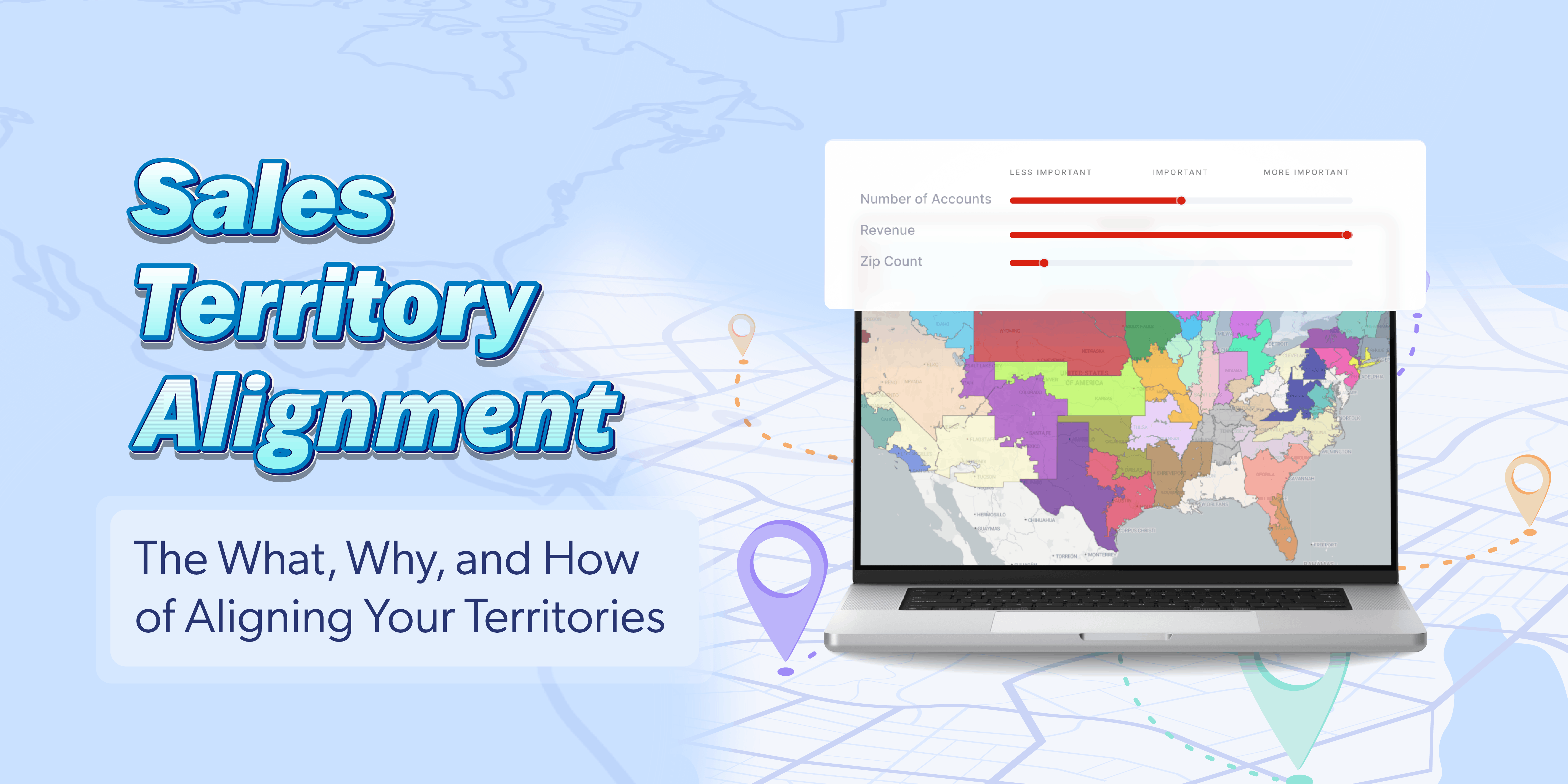
Sales territory alignment is the act of dividing a target audience into distinct geographic or account-based groups and assigning them to specific sales reps.
Sales territory alignment strategies should be developed with intention. You don't assign leads willy-nilly. You match potential customers to the right sales rep based on location, industry, and/or account size. You also consider each rep's expertise to maximize their success.
Picture this: you manage a field sales team that sells industrial equipment across three states. Unfortunately, you haven't aligned your territories, so your reps often drive hours to visit prospects who have already been approached by others on your team. Meanwhile, high-value accounts are completely ignored. This should be truly infuriating to any seasoned sales individual!
But there's good news: effective sales territory alignment will ensure your reps have clearly defined areas to work. And each area will have the right mix of prospects, minimizing wasted travel time while maximizing face-to-face selling opportunities.
What if your sales reps immediately knew which leads belonged to them and thus could close deals faster? Company profits would soar high as a crow, right? Sales territory alignment can make this a reality.
Now that we have a territory alignment definition, let's talk about why it's so beneficial:
Territory alignment will bring clarity to your field sales process.
How so? By determining which leads and clients belong to which reps. Generally, the absolute simplest way of doing this is to dice up the map and assign prospects based on region. Then tell them to only focus on their geographic areas.
If data-driven and done correctly, the alignment process will prevent infighting. It might even encourage reps to help each other (imagine that)! After all, they have plenty of their own prospects to sell to. Why wouldn't they tip each other off when they know something about a potential customer in their teammates' territory?
Overall, fair territory planning helps to nurture that positive but productive sales team culture sales managers should strive for!
Take a deep dive into the nitty-gritty and understand the negative impact of sales territory disputes, or get other territory planning and sales strategies from sales guru Jeb Blount.
Speaking of productivity, fair sales territory design will keep your reps focused on what they do best: making tons of sales and bringing in piles of cold, hard cash.
Imagine two companies. One hasn't balanced its territories, so reps fight over leads. Worse, the company has a bad reputation in the marketplace because every lead is contacted multiple times. That's what happens when reps don't have clear boundaries about who they can sell to.
The second company doesn't have these problems. Its territories are perfectly balanced. Reps have plenty of time to generate new leads and serve existing customers. After all, they spend less time in the car traveling to potential buyers. This has led to greater customer satisfaction and more referrals.
As you can see, aligned territories help reps get more done. They have time to contact new leads, build relationships with promising prospects, and prioritize repeat purchases from existing customers. And since all of this happens within a specific geographic location, reps minimize windshield time and fuel expenses, which is good for your company's bottom line and rep morale. Win-win!
On the flipside, having misaligned or imbalanced sales territories can sabotage other sales initiatives, such as quotas or contests, souring rep morale without management even realizing it.
Sales territory planning is good for customers too.
As mentioned, nobody wants to hear from three different salespeople at the same company. This is especially true if they've already told the first wave of salespeople that they aren't interested.
This won't happen when your sales reps have well-defined sales territories. They'll know exactly who their prospects are, develop expertise that relates to their prospects' problems, build meaningful relationships with potential customers, and ultimately, make more sales.
Your sales reps will also handle customer complaints in less time, because they'll be geographically closer and more familiar with each account's history.
All of these things will lead to greater customer satisfaction - and hopefully, repeat sales!
For example, Mr. Fixit, a premium mechanic tools brand, sells to many auto shops in the Boise, ID area. Before the Mr. Fixit sales team realigned its sales territories, Rep A sold to Terry's Tires, while Rep B sold to Carla's Car Kingdom down the street. Because of this arrangement, referrals were a mess.
Rep A and Rep B constantly fought over referred leads, which led to confusion for customers. Which rep should they respond to? Maybe they shouldn't respond at all and avoid the headache…
After the realignment, Rep A sells to both autoshops to help increase local rapport and routing efficiency. Meanwhile, Rep B is crushing it in an untapped neighborhood downtown. Just as important, the reps no longer fight over referrals because they work separate areas, and customers are more satisfied.
What do you get when you combine productive sales reps and happy customers? Higher company profits. Productive sales reps connect with more leads and close more deals than unproductive sales reps. Happy customers purchase more often than unhappy customers - and refer their social circles to do the same. In both situations, your company profits.
Adversely, the financial repercussions of ignoring modern territory alignment are serious: 2-5% of revenue disappears every year due to poor rep-to-territory match and alignment. For a $50 million dollar company, that’s $1-2.5M lost before the sales year begins.
On top of that, there are cost-saving benefits to think about too. For example, you'll avoid overhiring when you know exactly how many reps you need to cover each territory. You'll also minimize gas expenses and wear and tear on vehicles by instructing reps to only sell within their geographic regions. And in the strategic long-term, repeat and referral sales will reduce the need for expensive marketing campaigns.
Bottom Line: If you’re not already doing it, starting proper sales territory planning can feel like low-hanging fruit for some guaranteed ROI. But continuing a regular sales alignment audit is an integral ingredient in creating the profitable efficiency machine you want your sales team to be.
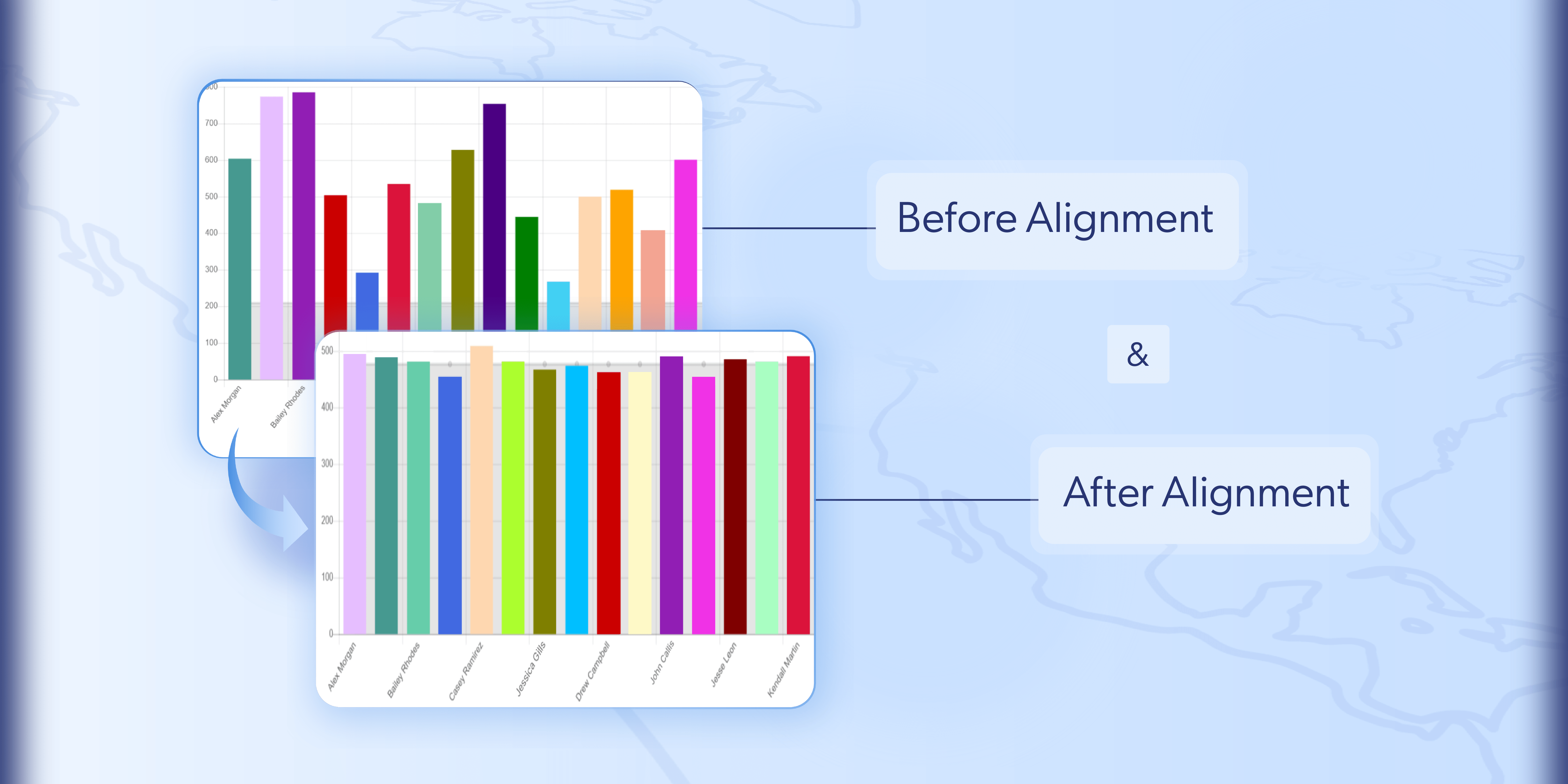
The territory alignment process requires careful analysis and strategy. But don't worry and don’t overthink it - just follow these five steps to achieve sales territory planning success:
Start your sales territory planning with sweet, sweet data.
Tally the number of salespeople on your team, as well as their current accounts, performance metrics, and physical locations. Then research your target audience. What industry are they in? What are their pain points? And which geographic locations do they operate out of?
Don't forget to analyze your competitors too. Identifying their strengths and weaknesses in different markets will help you design territories that give your team strategic advantages.
Take an honest look at your current territory structure.
You might find that certain geographic boundaries align with customer clusters, from general income level to regional culture peculiarities. Or that some reps have strong relationships in specific areas - maybe they have been working it for several years or maybe they grew up in the region. These things are good.
Take time to identify what's broken as well. For example, some territories might have an abundance of prospects while others have next to zero. Some territories might be too big, forcing reps to spend extra time traveling from one prospect to the next. These things are bad.
Fortunately, territory analysis will give you a foundation to make meaningful improvements.
Not all sales reps are created equal.
Evaluate each team member's strengths and weaknesses. One might excel at technical sales, but struggle to build meaningful relationships with prospects. Another might have a way with people but lack the detailed product knowledge to sell to enterprise-level accounts.
The goal is to cut territories that align each rep's strengths with the prospects they'll encounter. So, a rep with deep manufacturing knowledge should handle industrial accounts, while someone with a consultative approach might be perfect for complex, multi-stakeholder deals.
Learn how to hire GUMPs (the best type of rep) from the get-go with fresh insights from sales warrior Jason Forrest.
Now that you've collected relevant data, performed a territory analysis, and assessed your rep's abilities, AKA completed steps one through three, you can design sales territory boundaries.
Keep these four things in mind:
- Your territories should be the right geographical size. Too large and your reps won't be able to cover them effectively. Too small and they won't have ample opportunities.
- Your territories should contain the right number of leads. Too many leads is overwhelming. Too few leads is a poor use of resources. You need balance.
- If possible, your territories should contain leads in similar industries. That way, your reps can work with similar customer types and develop sector expertise.
- Finally, your territories should align with each rep's strengths, as we talked about. This will maximize individual performance and job satisfaction.
Whew, you aligned your territories! It was a lot of work, but you got through it. Now you can kick back, pop a bottle of champaign, and celebrate, right? Not quite…
You need to continually monitor your territories, then realign them when necessary.
To do this, track metrics like sales per territory, customer satisfaction scores, and rep utilization rates. If you're not happy with the results, make changes to achieve success.

Always be ready to realign territories - even if things are going well for your field sales team. Markets shift, companies relocate, sales reps come and go. I suggest monthly reviews in the beginning. If you're happy with the results, move to quarterly reviews.
For quick reference, here is a sales territory plan template. Feel free to print it out, hang it somewhere visible, and use it to remind yourself when it’s time to revisit one of the essential elements of your alignment review process.
TERRITORY ALIGNMENT EASY STEPS
1. Collect Data: Info on team, ICP, industry, competition
2. Territory Analysis: Weigh metrics & geography. What’s working? What’s not?
3. Assess Reps: Line up performance, skills, and expertise
4. Design Territories: Consider geography, lead volume, travel, rep strengths, etc.
5. Audit: 3, 6, or 12 months from now… do it again!
- Collect Data: Gather information about your sales team, target audience and competition. Document performance metrics and geographic distribution of accounts.
- Perform Territory Analysis: Evaluate your existing territory structure. Identify what's working and what should be improved about your current territory coverage.
- Assess Rep Strengths: Review each salesperson's performance, skills, and expertise. Match rep capabilities with territory requirements for maximum effectiveness.
- Design Territories Strategically: Create balanced territories that consider geographic scope, lead volume, and industry focus. Remember to account for travel efficiency and your sales reps' strengths when developing a territory planning sales strategy.
- Alignment Audit & Review: Establish regular review cycles to monitor territory performance. Make data-driven adjustments as market conditions and team members change.

Different types of territory alignment methods work better for different business models. Understanding the various types of sales territory structures will help you choose the right approach.
- Geography-Based Alignment: This method divides territories by physical location - states, regions, zip codes, or cities. For example, a beverage distributor might assign one rep to northern California and another to southern California. This approach sets clear boundaries for reps and helps minimize travel time. But it also makes it difficult to create balanced workloads and doesn't account for industry expertise.
- Account-Based Alignment: This method assigns territories based on customer characteristics. For example, a medical device company might assign one rep to all hospital systems, while another handles private practices. This method lets reps develop deep industry knowledge, but increases travel time as they criss-cross regions.
- Hybrid Alignment: This method combines geographic and account-based approaches. For example, a manufacturing company might assign geographic territories to most reps, but assign large accounts to a specific team member with certain skills. This optimizes for efficiency and expertise, but requires more management to prevent overlap.
Consider corner cases too. What happens when a customer relocates or an inbound lead falls outside existing territories? Establish clear policies for these situations to prevent conflicts.

Let's see how the five-step alignment process transforms real sales operations.
Remember Wolf Cola from the beginning of this article? Its round-robin system seemed fair until they collected data and discovered Rep A handled 60% of rural accounts, while Rep B's leads were clustered downtown. Because of this, Rep A spent hours driving to meet leads.
After analyzing territories and assessing abilities, they carved the state by drive time and account density instead of lead sequence. Rep A now covers the compact eastern metro with high prospect volume. Rep B handles the west side of the city and outer suburbs. This simple change reduced travel costs dropped 40%, and both reps finally hit quota.
MedTech sold imaging equipment to hospitals and private practices, but never formalized its strategy. As such, every rep chased every lead type - and sales suffered.
After careful analysis, MedTech realized hospital deals needed six to eight months and technical depth, while practices closed in weeks thanks to dedicated relationship building efforts. So, they redesigned by account type: Rep A handles all hospital systems in the state. Rep B owns private practices in the northern part of the city. And Rep C owns private practices in the southern half of the city. Now, all reps are happy and their win rate jumped 35% in six months.
Industrial Supply assigned four different sales territories to four different reps. The problem? Three massive plants generated 60% of revenue, but were split across territories. The solution was simple: Give all three accounts to the best sales rep. Then assign geographic territories, each with balanced drive times and opportunities, to the other reps on the team.
This strategy enabled the top rep to increase renewals by 25%. The other reps stopped neglecting smaller clients and discovered untapped potential. Revenue grew 28% YoY.

Designing sales territories is a straightforward process - but that doesn't mean it's easy. These tips will help you avoid common pitfalls and create a territory structure that drives results.
I have a question for you: What do you want to achieve with sales territory alignment? Your goals should drive your decisions throughout the territory alignment process.
Do you want to boost sales revenue? Are you trying to break into a new market? Maybe you're looking to reduce operational costs or increase sales team morale and efficiency.
Whatever your objectives, write them down and reference them throughout the alignment process to ensure your territory design supports your strategic priorities.
Fair territory planning means creating equitable opportunities across your team.
Make sure your reps aren't overworked or underutilized. You want them to stay busy, but not feel overwhelmed. This will produce the best results across your field sales team.
Also, assign territories based on your sales reps' abilities. Generally speaking, your most experienced reps should handle the most important and/or complex deals. This approach will help you maximize revenue while developing your entire team's capabilities.
Finally, avoid common territory alignment challenges. Some of the most common are:
- Outdated Territory Design Strategies: Managing territories with spreadsheets and custom excel programs is a waste of time and leads to errors that frustrate customers and kill deals.
- Neglecting Rep Input: Your reps have on-the-ground knowledge about customer relationships, travel realities, and market nuances that you don't. Include them in the territory alignment process to build support and benefit from their insights.
- Targeting the Wrong Accounts: Simply pursuing any and all companies or weighing them similarly isn’t efficient. Make sure to consider your ideal target profile and size.
- Neglecting Fresh Technology: Is your company part of the 83% of organizations relying on outdated spreadsheets for territory planning and alignment? I hope not - there are modern tech stack options that autogenerate fair territories that minimize drive time and maximize coverage. Look into popular territory alignment options for your industry and company size - tech moves fast and you may be pleasantly surprised with the ROI on what you find.
Badger Maps is a routing & mapping app that automates data collection and uplevels field team performance. From planning your day to managing your territories, Badger optimizes every aspect of the field sales process.
Looking for our logo?
Grab a Zip packed with our logo in PNG and EPS formats.
Get Started now with a free trial of Badger Maps, no credit card required!
free trial