If you’re a field salesperson, especially in the pharma or medtechindustry, wondering how to build a thriving, long-term career - especially in an industry where access, margins, and competition are constantly shifting - you’ll want every insight from this conversation.
In one of the best episodes of Outside Sales Talk, host Steve Benson sat down with medical sales veteran Mike Hayes - 30+ year field sales expert, podcast host of Get Hired in Medical Sales, and career coach who's worked with industry titans like Johnson & Johnson, Glaxo, Novartis, and Merck - and extracted pure Mike Hayes sales gold on managing your career path, knowing when to jump ship, and building real wealth through strategic field sales moves.
We’ve distilled the richest Mike Hayes sales insights into actionable takeaways you can apply today - whether you’re breaking into pharma sales, advancing along the med device path, or simply aiming for higher earnings and job security.
Mike Hayes Insight #1 - How to Develop a Long-Term Career Plan: Understand What Actually Motivates You
Hayes drops truth bombs early: "I love sales because of the flexibility, the income potential and the opportunities that are out there. Once a person has experience in sales, really, the sky's the limit." But he immediately challenges salespeople to get introspective about what actually drives them - because there's no one-size-fits-all career path.
Match your risk tolerance to your comp structure: If you're a family person who values stability, Hayes recommends pharma sales with "a little more of a higher base salary and a little less of an open-ended commission plan" to take some risk out while still growing your base. If you thrive on high-stakes pressure, seek commission-heavy roles that put more on the line.
Reflect on what you like and don't like about your current industry: Hayes urges reps to ask "what have I learned about where the opportunities are and maybe where they're shrinking and where would I be a good fit? Like where could I see myself continually growing?" Don't just chase any sales job - chase the ones aligned with your strengths and the market's trajectory.
Recognize sales = job security in any economy: Hayes reminds us: "When the economy is bad, they want more salespeople. Got to get sales up. When the economy is good, they want more salespeople." This career flexibility is unmatched, but only if you position yourself strategically.
Why This Works: You can't build a sustainable, wealth-generating career by chasing every shiny comp plan. Understanding your personal drivers - risk tolerance, lifestyle needs, what energizes you - lets you pick roles where you'll actually thrive long-term instead of burning out or feeling trapped.
Mike Hayes Insight #2 - How to Know Yourself: Use Personality Assessments to Find Where You Thrive
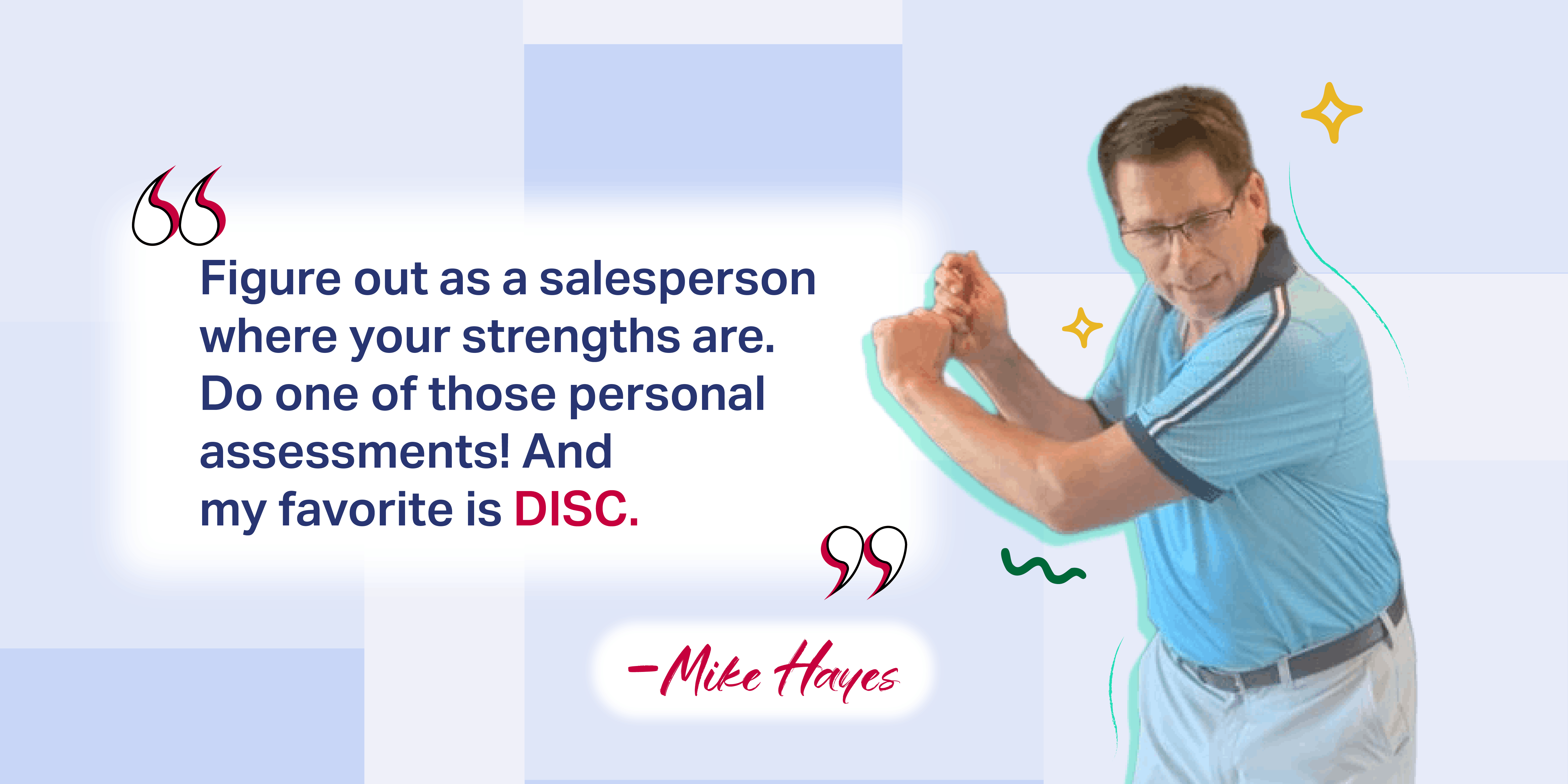
Hayes strongly advocates undertaking sales personality assessments, the DISC assessment in particular (D=Dominance, I=Influence, S=Steadiness, C=Compliance), and declares that he's an "I" - the relationship-builder - and leverages it ruthlessly.
Identify where in the sales cycle you excel: Hayes breaks down the full sales process: marketing, face-to-face selling, technical/engineering conversations, delivery. Each stage needs different personality types. "I love knocking on doors. I mean, no one likes cold calling. I like walking in and meeting somebody new or going out to lunch or having a cup of coffee." Know if you're the door-knocker or the specs guy.
Get certified in personality assessments yourself: Hayes invested in becoming a DISC-certified trainer because "that helped me so much in sales to get refreshed with my upper management and my sales, to have this and to be aware of these assessments and realize that some of these personality types are so strong in one area that it's not my fault or my problem that I'm struggling here."
Learn to read other people's personalities to adapt your pitch: Once you master your own profile, Hayes says "you shift from learning about yourself to being able to read other people. Now that comes in really handy in sales" because you can tailor your approach to match their communication style. This adaptability is one of the 22 best sales techniques top performers use.
Why This Works:You stop trying to be a cookie-cutter "top rep" and instead weaponize your natural strengths. When you know you're an analytical C selling to a relationship-driven I, you adjust. When you're an enthusiastic I and realize your customer is a detail-oriented C, you slow down and bring data. Self-awareness = sales leverage!
Mike Hayes Insight #3 - How to Set Smart Career Goals in an Economy Where 3-Year Plans Are Dead
Hayes obliterates old-school career planning: "We know those days are gone" of working 25-30 years for the golden watch and pension. Instead, he advises: "You really don't want to look more than beyond really a year or two, three at the most." Focus on what you can control in the short term.
Work backwards from annual/quarterly goals: Hayes says "my goals boil down to how do I be successful in that year? How do I do the things that I can focus on in that start of the year, that quarter to reach the sales goals, the activity metrics that my boss would look at." Win the sales contest, finish above plan, control your daily metrics - that's the game. Learn more about time management hacks for sales teams to maximize these metrics.
Accept that you'll probably change jobs every 2-3 years: Hayes admits "you create value by really, people might disagree with this, but really by changing jobs. As you conquer one skill or one sales position and you kind of climb up, chances are you're going to make more money, have more opportunity when you jump ship." Competitors will pay you more than your current employer for the same skills.
Recognize anything beyond 12 months is irrelevant: After the pandemic, Hayes learned "even a year is plenty far enough in planning, but to focus on the metrics that you can control to make your numbers." Markets shift, companies pivot, pandemics happen - obsess over this year's controllable activities.
Why This Works: You stop wasting energy on 5-year fantasies and instead dominate the metrics that matter today. When you crush your current role for 1-2 years, you become marketable - and that's when you either get promoted internally or jump ship for a bigger payday. Short-term excellence compounds into long-term wealth.
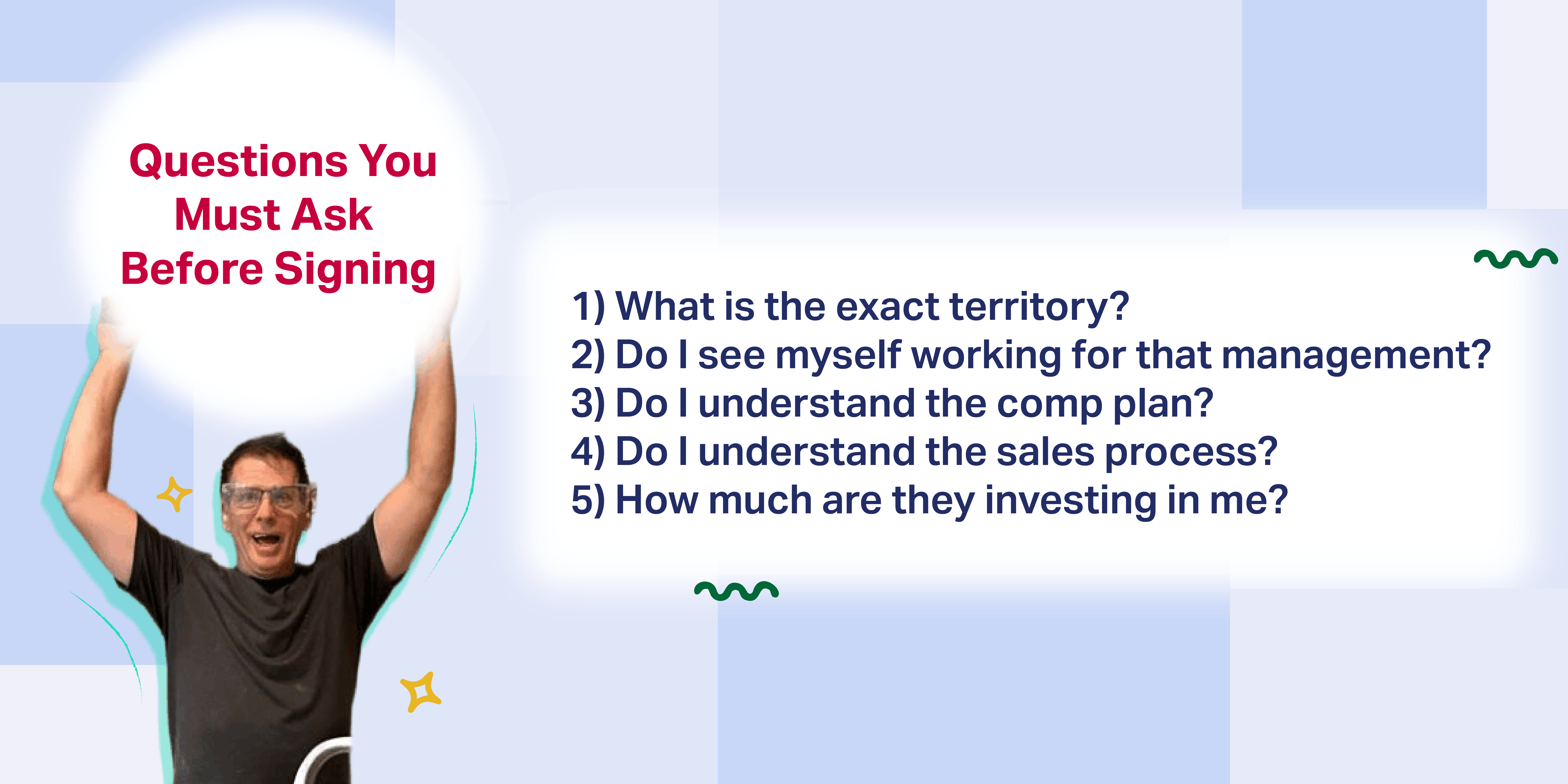
Mike Hayes Insight #4 - How to Evaluate a New Sales Job: 5 Critical Questions Before You Sign
When Hayes helped a critical care nurse land her first medical sales role (she doubled her income), they worked through a framework to evaluate if the offer was actually good. Hayes breaks it down: "Here are the things that you want to think about if you're a salesperson and maybe even as a manager to make sure that when you put an offer out there, people are on the same page."
Understand the exact territory: Hayes warns "sounds simple, but it can be confusing. Is it the state of Indiana? Is it big customers down to mid-range customers? Do you guys share a geography?" Vague territories = future conflict and capped earnings. Get specifics on geography, account tiers, and any territory sharing. For a deeper dive, check out our guide on sales territory management.
Evaluate your connection with the manager: "Did you have a good connection with him through the interview process? Or maybe not... maybe he was away on a business trip, but you didn't really get to know the person you work for. That's a red flag." Your manager makes or breaks your experience - if you didn't meet them, pump the brakes.
Decode the comp plan's actual math: "Do you as individual understand the math on how that works? Is it simple enough that you know if you sell X number of widgets, you're going to make X number of dollars?" Hayes warns comp plans can be "very complicated" so make sure you can calculate your real take-home before signing.
Clarify the sales process and remote vs. field balance: "Is it a lot of Zoom today? Well, maybe I hate Zoom... is it 75% Zoom right now because the customers aren't seeing us, I might hate Zoom. I might not be that good on Zoom." If you thrive on in-person rapport and they're 90% virtual, you'll struggle.
Assess training investment: "A good company is going to invest a lot of money in you for training... How much are they really investing in me?" If it's straight commission with "here's the customer list, go get them," you're set up to fail unless you're extremely self-sufficient.
Why This Works: Too many reps sign based on base + commission without digging into the details. When you demand clarity on territory, manager relationship, comp math, sales process, and training, you avoid nightmare scenarios where the "great opportunity" turns into 80-hour weeks with no support and impossible quotas.
Mike Hayes Insight #5 - How to Know When It's Time to Jump Ship (And When to Stay Put)
Steve Benson nails it: "I've actually given people that exact advice before: switch companies frequently. Because there you often get to jump a leg up on the ladder." Hayes agrees but adds nuance - he's been at his current company almost 20 years because "I got to a level where I really love it and they like me. I like them! So when you find that sweet spot, yeah, ride that ship."
Evaluate if you're hitting your numbers and being rewarded: Hayes asks "am I hitting my goals? If so... am I to be rewarded for it? And hey, sky's blue. Let's keep cranking here." If you're crushing quota but not getting promoted/paid more, it's time to explore. If you're missing numbers, diagnose if it's you, the company, or the market - and review 8 reasons sales reps lose deals to identify where you can improve.
Ask if the company ladder is leaning against the right wall: In his industrial sales days, Hayes loved the work but realized "profit margins continue to shrink... I'd sell a big order and the boss to say congratulations, but we're losing money on your order." He jumped to pharma where margins supported growth. Don't climb a ladder in a dying industry.
Recognize when you're green vs. when you're seasoned: Steve points out "you're kind of green in a company until you've been there for three years... Once you're there for three years, you really know how things work." If you're past three years, thriving, and getting paid market rate, consider staying - your institutional knowledge is gold.
Weigh the risk of the unknown: Hayes admits "it's a little safer to stay where you are. And I'm very loyal." But for younger reps, he says "for the millennial, the younger crowd, I think it's good. And not just to change jobs to change, but... if you've had these successful jobs... bring all that together in a really interesting, persuasive story."
Why This Works: Blind loyalty costs you money, but job-hopping without strategy wrecks your brand. The sweet spot is 2-3 year stints where you master a role, deliver results, and then move when you're not being rewarded - or stay for the long haul if you've found a company that promotes from within, pays market rate, and genuinely invests in you.
Mike Hayes Insight #6 - How to Stand Out and Get Promoted Through Networking and Personal Brand
Hayes shares his own origin story at his current company: he'd been rejected twice after flying to Philly and Cleveland for hiring events, spending money on a "brag book," and coming up empty. Then: "I met a fella in a parking lot in a medical building. We were both making sales calls. We introduced ourselves, and through that friendship, one day I'm like, hey, I'm getting promoted. We have an opening. You should talk to my boss." He got hired and stayed 20 years.
Master LinkedIn networking with genuine curiosity: Hayes says "the key is the networking to meet other people. And compliment them and ask for their advice as an initial connection on LinkedIn." Example: "Steve, I've had several friends use Badger Maps. It's helped their productivity. How'd you start the business? And I'm trying to get into sales. Do you have any advice?" This beats generic "Can you help me?" messages.
Invest in your personal brand and story: When helping people get hired, Hayes starts with "your story. Like if you're to go to an interview for a very high paying job, I want to help you to have a story and develop your story... why you got hired by this company, why you left, what your accomplishments were."
Double down on your strengths instead of fixing weaknesses: Hayes urges "Don't really focus on getting better your weaknesses. Yeah, you want to address them, but really put your energy into your strengths and really excel at those." If you're a conversational relationship-builder, own it. If you're a technical specs wizard, lean in. Learn more strategies for becoming a top sales performer by leveraging your unique strengths.
Show up consistently where your network is: "I think the successful people are in the way to grow in our career that the tips are it's through those people you meet... now LinkedIn allows us to do that in just a click."
Why This Works:Referrals beat cold applications 10-to-1. When you build genuine relationships, invest in your personal brand, and can articulate your "why I'm here" story compellingly, you unlock opportunities that never hit job boards. People hire and promote those they know, like, and trust - networking is the unlock.
Mike Hayes Insight #7 - How to Invest in Yourself: Self-Learning That Actually Pays Off
Hayes hit a wall mid-career: "I was stuck in my career. I felt like I had a manager who was just not working with me very well. I felt very stagnant." His solution? "I paid like $1,500... to hire a career coach. Just did a couple of these assessments, really kind of evaluated where I was. And that was just very helpful. It reinvigorated me." Then he became DISC-certified himself.
Leverage the "information age" for continuous learning: Hayes raves: "The podcast, right? Just podcasting. Awesome. You can hear from every kind of sales leader in every specialty... between podcast, audio books on demand in the car" there's no excuse. Make your car a mobile university.
Invest real money in coaching and assessments when stuck: That $1,500 career coach was "the best money ever because I just invested in myself." Hayes emphasizes you get what you pay for - free content is great for maintenance, but breakthrough moments often require paid coaching/training.
Get certified in frameworks that help you sell better: After his DISC certification, Hayes could "understand these assessments and realize that some of these personality types are so strong in one area that it's not my fault or my problem that I'm struggling here. It just... takes a lot more energy and a lot more work on our part."
Find your specific targeted growth area: "There's just so many tools out there. But I think being willing to invest and grow and find whatever specific targeted area that motivates you or challenges you and invest in it."
Why This Works: Your company invests in product training, but they won't invest in your long-term career growth - that's on you. When you spend $1,500 on a coach, 10 hours on podcasts, or get certified in sales frameworks, you're compounding your earnings potential for decades. One insight can unlock $50K+ in career moves.
Mike Hayes Insight #8 - How to Build Personal Wealth Through Sales (Not Just Hit Quotas)
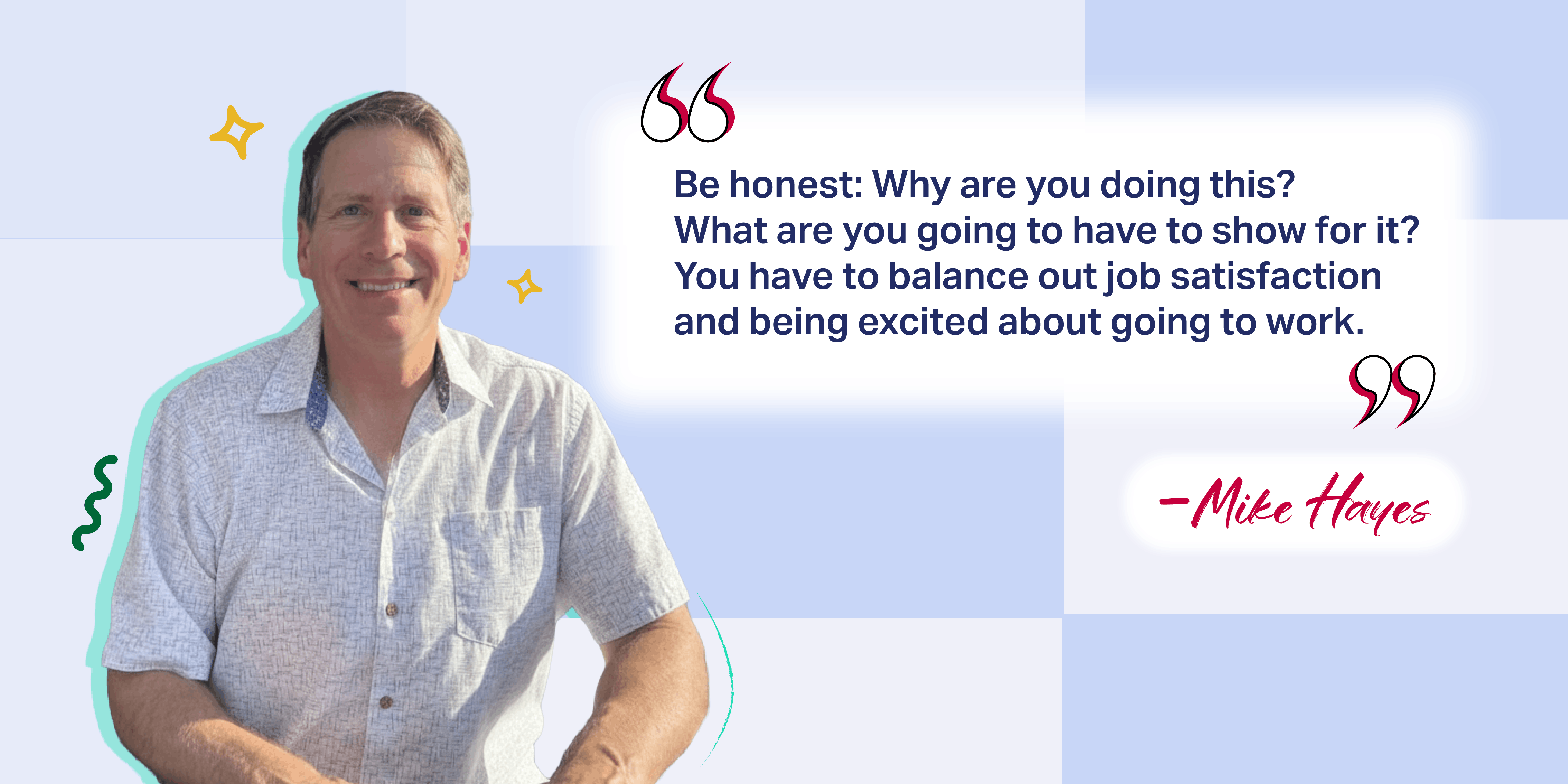
Hayes gets real about the endgame: "You want to build some personal wealth. Let's just be honest. I mean, why are we doing this? Right? What are you going to have to show for it?" He admits he "overdid the real estate and made some bad investments" but learned to balance job satisfaction with net worth growth.
Track if your net worth is growing at the same pace as your sales success: Hayes says "if I look back after a couple of years, let's say five or 10... I have to have a pretty good map on is it leading to success and that success is different for all of us." If you're hitting quota but not building wealth, something's wrong with the comp plan or your spending.
Position yourself in high-paying industries: Hayes points out "if you Google the best $100,000 sales jobs, the top 10, two of those, one will be medical and one will be pharmaceutical sales." Don't just sell anything - sell in industries where six-figure incomes are standard, not unicorns.
Prepare for the worst while riding the best: "Do am I winning enough... am I building my own personal wealth enough that if this story ends, if this company quits, if we have another pandemic... if they say, hey, your service is no longer needed... am I being successful in what it means for me to be successful?" Building wealth also means maintaining your health - read our guide on 10 tips to avoid burnout while working in sales.
Evaluate higher-margin products and industries: Steve adds "look at the margins of the product... selling things with higher margin is always better because they're just willing to pay you more." Hayes sold industrial sales where "profit margins continue to shrink" and jumped to pharma where "our product has a margin because it's patent protected."
Why This Works: Hitting quota feels great, but if you're not building assets - home equity, retirement accounts, investment portfolios - you're on a treadmill. The goal isn't just to be "successful" by your company's metrics; it's to build personal wealth so you have options, security, and freedom regardless of what happens to your employer.
Final Takeaways
Mike Hayes' 30+ years in field sales prove that a successful sales career isn't about loyalty to one company or following some outdated playbook. It's about ruthless self-awareness, strategic job moves, relentless networking, and always asking: "Is this building my wealth and skills, or am I just running in place?"
Whether you're evaluating your first sales role or considering your fifth company, Hayes' framework is simple: know yourself, control what you can control in 1-2 year windows, jump ship when you're not rewarded for performance, invest in self-learning, and always position yourself in industries with high margins and growth. The golden watch is dead - build wealth and opportunity instead.
Success Starts by Taking Action
95,000+ field salespeople love our newsletters where they get actionable advice from top sales experts
Steve Benson is a Stanford MBA graduate, Google's top-ranked global sales rep, and the founder and CEO of Badger Maps. He also hosts the Outside Sales Talk podcast, one of the most listened-to resources for field sales professionals looking to sharpen their skills and grow their careers.
Who is Mike Hayes?
Mike Hayes is a 30+ year veteran of medical and pharmaceutical sales with extensive experience at top companies including Johnson & Johnson, Glaxo, Novartis, and Merck. He's the host of the Get Hired in Medical Sales podcast and works as a career coach helping professionals break into and advance within the medical sales industry. Hayes specializes in helping salespeople develop their personal brand, craft compelling career stories, and transition into high-paying medical and pharmaceutical sales roles.
What is Mike Hayes' podcast about?
Mike Hayes hosts Get Hired in Medical Sales, a podcast dedicated to helping sales professionals break into the medical and pharmaceutical sales industries. The show covers topics like crafting your personal sales story, translating transferable skills from other industries, understanding compensation structures, navigating the hiring process, and building a long-term career in medical sales. Hayes regularly features success stories of people who've transitioned from nursing, B2B sales, and other fields into six-figure medical sales roles.
Where can I find more related sales strategies?
You can find more sales career strategies and tactics on Mike Hayes' website at GetHiredInMedicalSales.com and by connecting with him on LinkedIn. For additional field sales insights, listen to the full Outside Sales Talk podcast episode featuring this interview, and explore tools like Badger Maps at badgermapping.com for route optimization and territory management. Hayes also recommends investing in personality assessments like DISC to better understand your sales strengths and how to position yourself for career growth. To further enhance your performance, explore our articles on 11 essential sales tools for sales reps and 47 best sales apps for field sales reps.
Badger Maps is a routing & mapping app that automates data collection and uplevels field team performance. From planning your day to managing your territories, Badger optimizes every aspect of the field sales process.