News: Now offering SSO.
Learn more
News: Now offering SSO.
Learn more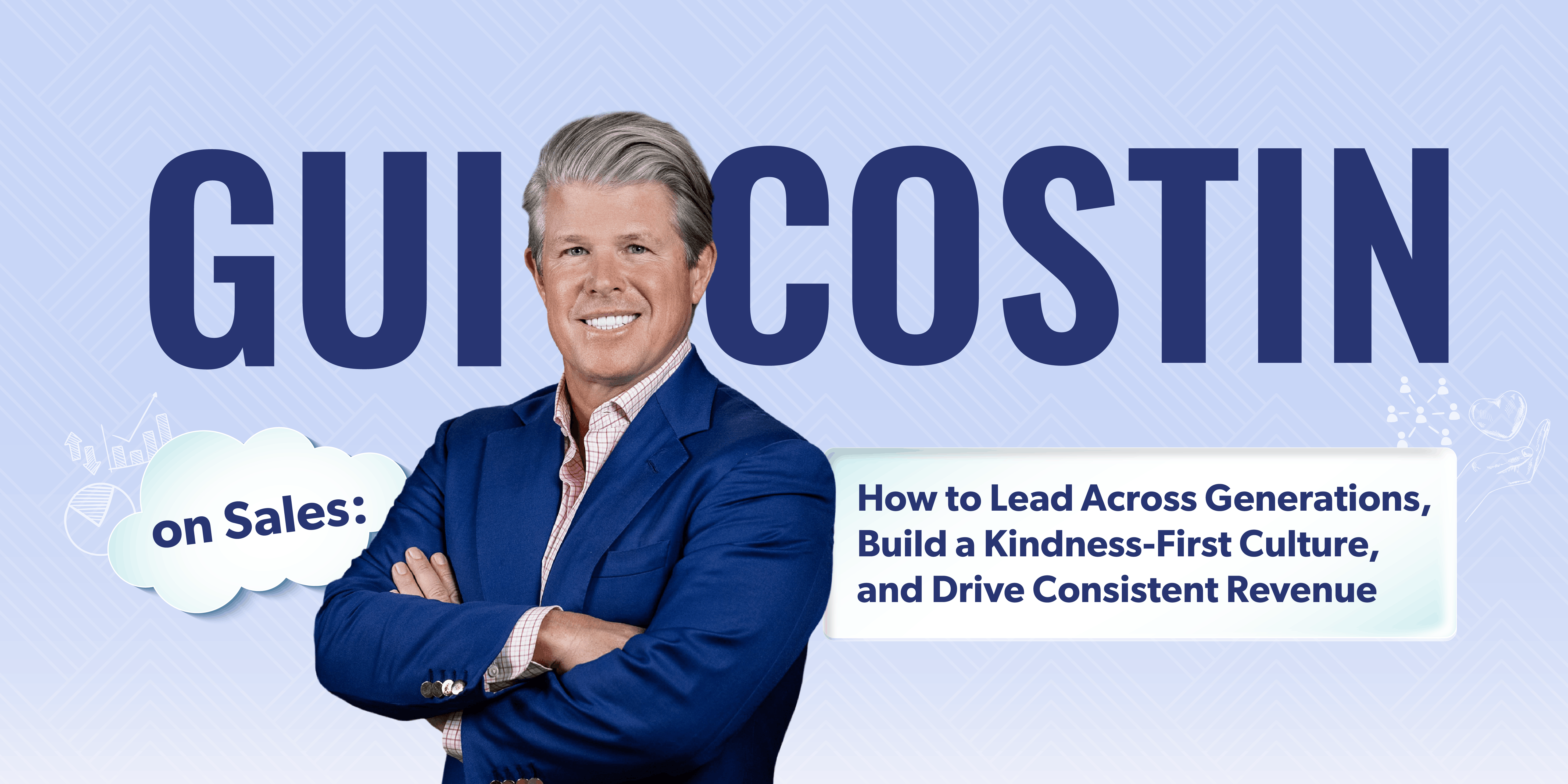
When Gui Costin sat down with Steve Benson on the Outside Sales Talk podcast, he delivered a masterclass in what it actually takes to build a high-performing, multigenerational sales organization - and keep it running.
As the founder and CEO of Dakota, a firm that has helped clients raise over $40 billion in the investment services industry, Gui brings the kind of hard-won leadership wisdom that only comes from decades of building, breaking, and rebuilding sales culture from the ground up.
What makes Gui Costin sales insights so compelling is that they cut against the grain of conventional sales management thinking. He's eliminated vacation policies, scrapped T&E limits, and built a company around a single word - kindness - while still demanding the highest professional standards from everyone on his team. He challenges leaders to stop being "nice" and start being kind, to own the sales process themselves rather than outsourcing it to a VP of sales, and to treat every generation in their workforce not as a management problem but as an untapped source of knowledge.
Here are the biggest Gui Costin sales leadership insights distilled from the interview. Listen to the full episode - Bridging Generational Gaps: Effective Leadership Strategies for a Diverse Workforce with Gui Costin - on Apple Podcast, Spotify, Pandora, and YouTube.
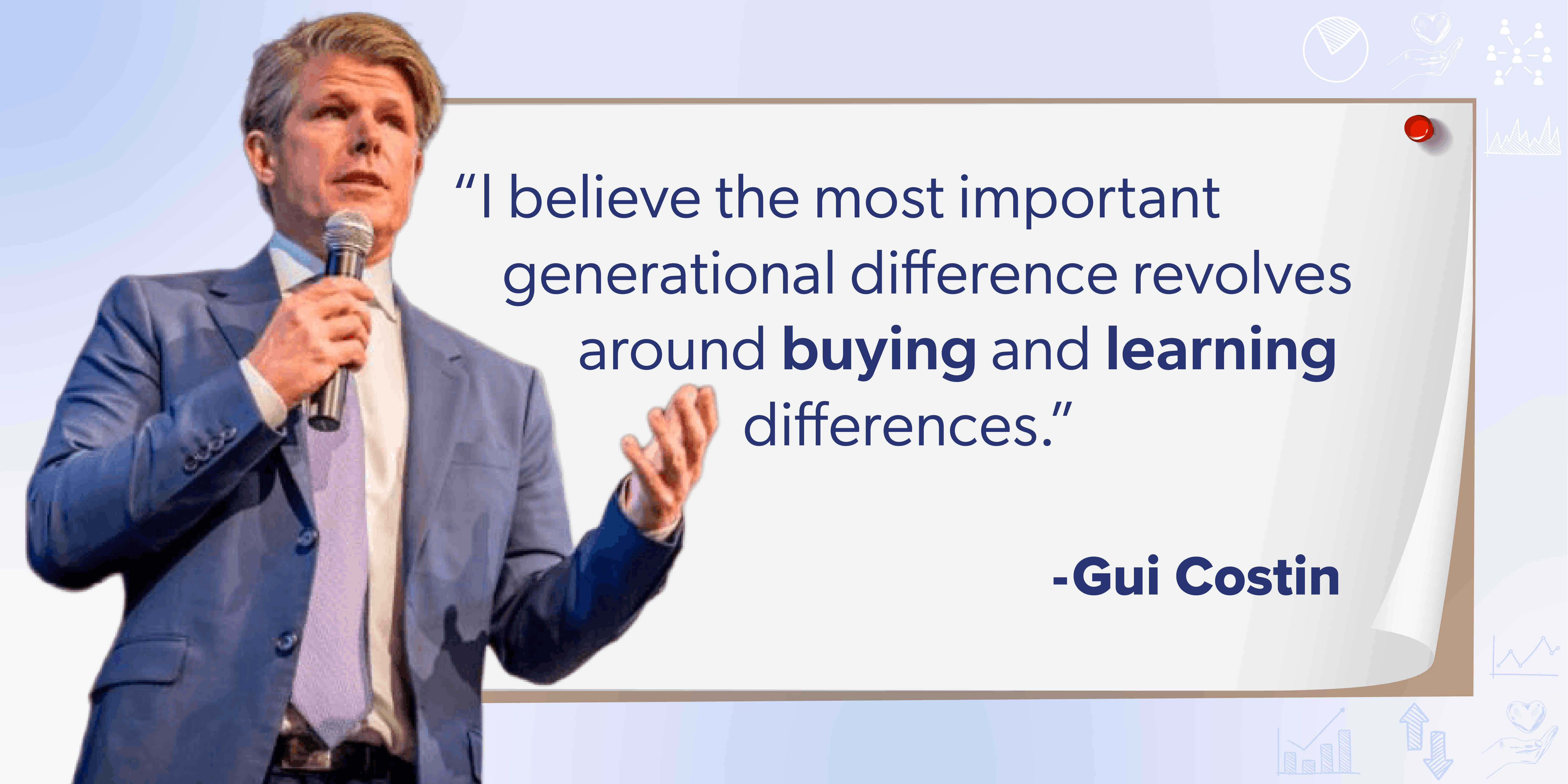
"The most important generational difference around buying and learning is that if you're a Gen X like I am, and you want to go search for something, you just Google it. Well, today, everyone looks to YouTube."
Gui's first book, Millennials Are Not Aliens, was written to demystify the assumptions older generations carry about younger workers. His core argument: the differences aren't about attitude or entitlement - they're about behavior, specifically how each generation searches for information, learns new skills, and makes buying decisions.
Why This Works: Generational friction in sales organizations rarely comes from malice - it comes from unexamined assumptions about how things should be done. Leaders who understand the behavioral roots of generational difference stop fighting their younger team members and start learning from them.
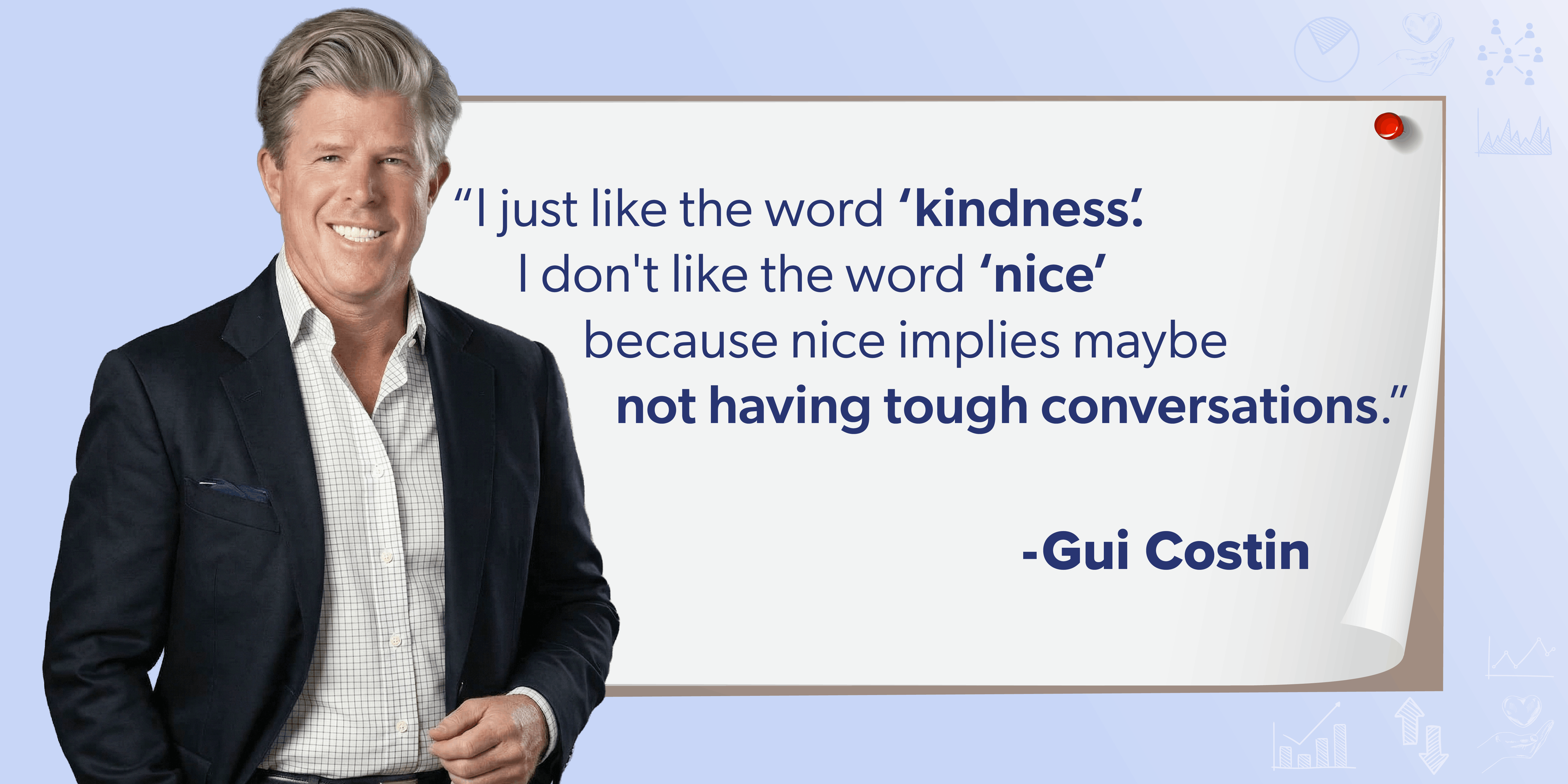
"I just like the word kindness. I don't like the word ‘nice’ because nice implies maybe not having tough conversations. We have a philosophy of kindness, but hard-charging. We're not going to sacrifice accomplishment, playing at the highest professional level, just because we're kind. Combine both those things!"
The distinction Gui draws between kindness and niceness is one of the most important - and most underappreciated - ideas in the conversation. Nice leaders avoid hard conversations. Kind leaders have them, with care. That distinction shapes everything at Dakota, from how feedback is given to how standards are enforced.
Why This Works: A culture of kindness removes the fear that causes people to hide problems, cover mistakes, and hoard information. When paired with high standards and accountability, it creates an environment where people perform their best not because they're afraid of consequences, but because they genuinely don't want to let their teammates down.
Building a culture that drives consistent sales performance starts with the right leadership fundamentals. Read Alice Kemper's Sales Manager Tips: 3 Proven Actions + 2 Bonus Tips to Help Teams Crush Quotas Consistently for a complementary playbook on leading sales teams to peak performance.
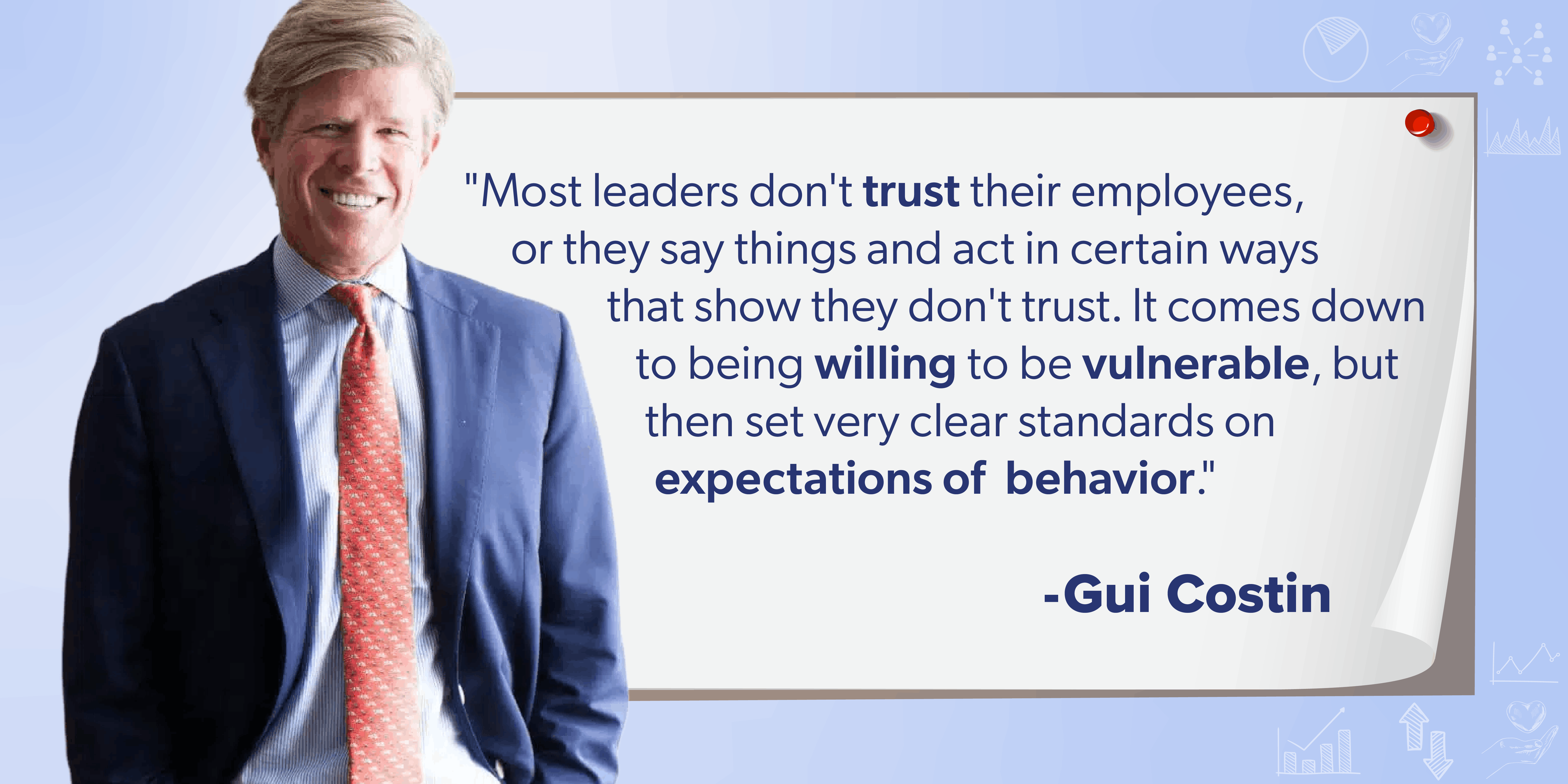
"Most leaders don't trust their employees, or they say things and act in certain ways that show they don't trust. It comes down to being willing to be vulnerable, but then set very clear standards on expectations of behavior."
Fifteen years ago, Gui eliminated Dakota's T&E policy and vacation policy entirely. His reasoning: most leaders' fear of being taken advantage of is a brain problem, not a reality problem. When you treat adults like adults - and back it up with clear standards - they almost universally rise to the occasion.
Why This Works: High-trust environments outperform low-trust ones in virtually every measurable dimension - retention, engagement, customer satisfaction, and revenue. Gui's track record at Dakota, including raising over $40 billion for clients, is a compelling proof point that trust-first leadership and hard-charging performance aren't in conflict.
"People's biases - those are one of the silent killers of an organization. You wonder why things aren't getting done in a certain way or a certain place. And you know the person's a good worker, they're a good person, they have the right intentions. Then you just realize they have a bias against something."
One of the most nuanced ideas Gui raises is the role of unexamined bias in organizational dysfunction. Not bias in the charged political sense, but the quieter, more personal kind - the inherited assumption, the "my dad always told me" belief, the gut-level resistance to something that just doesn't feel right - that never gets surfaced or questioned.
Why This Works: Bias-driven friction is almost always invisible until someone names it. Leaders who create safe space for the "why" conversation don't just solve individual problems - they build organizations that can learn and adapt continuously, which is the only real competitive advantage in a fast-changing market.
Understanding what drives human behavior in sales conversations can unlock your team's performance at every level. Read Mark Bowden's insights on Sales Success Through Body Language and Nonverbal Communication for a science-backed complement to Gui's leadership framework.
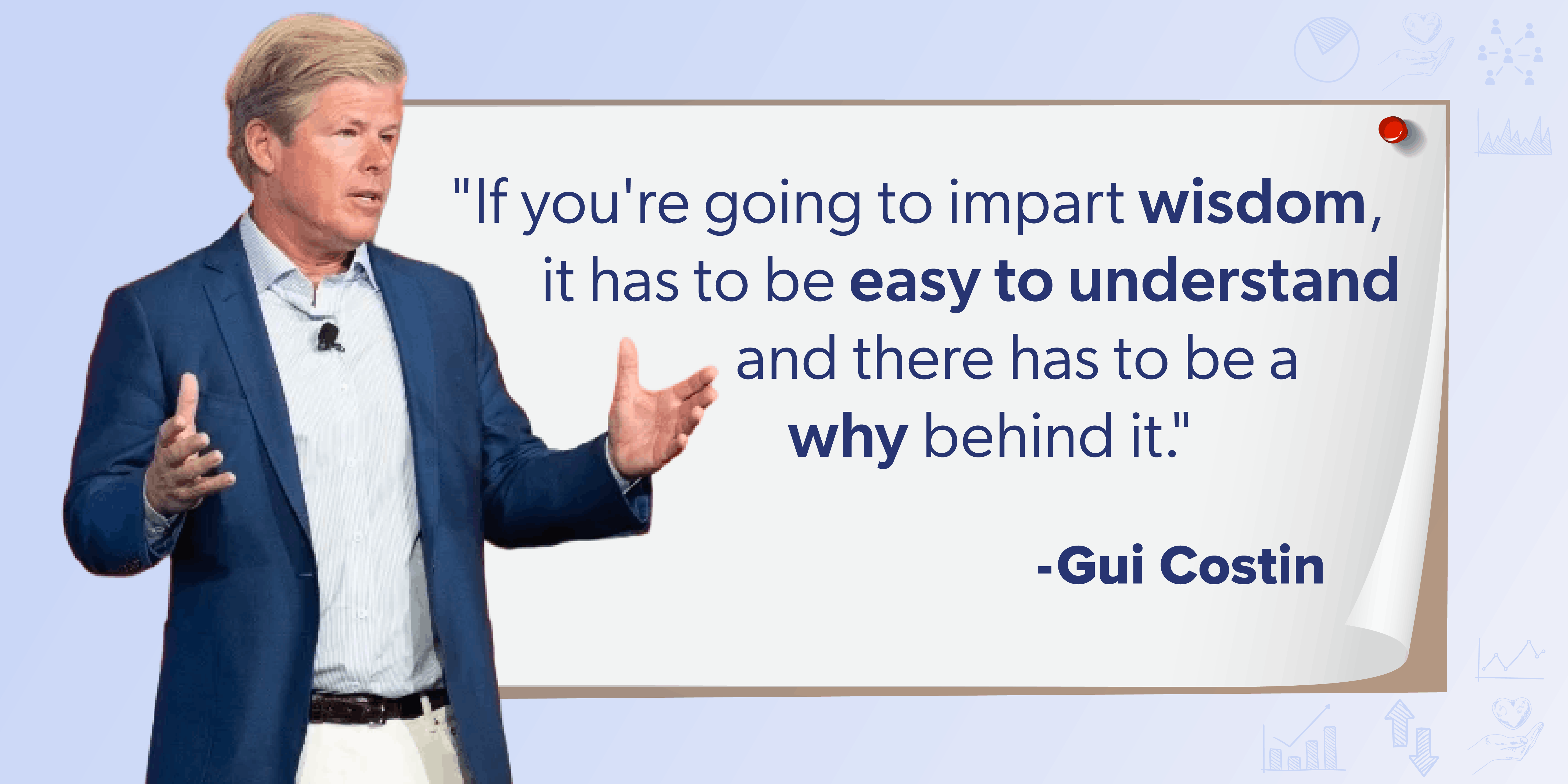
"If you're going to impart wisdom, it has to be easy to understand and there has to be a why behind it."
Dakota doesn't just write its values on a wall - it builds them into the architecture of daily work. From murals of company sayings in a 20-foot office tunnel, to annual personal bio videos for every employee, to monthly W Days ("what's working, what's not working"), Gui has created a culture where the organization's standards are impossible to ignore and easy to internalize.
Why This Works: Values that live only in a handbook don't actually live anywhere. Gui's insight is that culture has to be embedded in rituals, physical spaces, and repeating conversations - or it fades. The more creative and specific the vehicle, the more deeply the value gets absorbed. This is the difference between a company that says it has a great culture and one that actually does.
"The CEO of any organization has to own the sales process. Because generally the CEO was and is the number one salesperson. So they have to figure out - it's the job of a CEO - how you generate revenue."
This is Gui's self-described "zinger" - and it lands hard. The pattern he describes is one of the most common and costly mistakes in early-stage and scaling businesses: outsourcing the sales process to a VP of sales before the CEO has codified what actually works, then watching that person reinvent the wheel, disrupt the culture, and exit nine months later.
For more on building a high-performance sales culture with the right processes in place, read Paul Smith's guide on how to Sell With a Story and Elevate Your Sales Process Through Storytelling - a powerful complement to Gui's process-driven approach.
"Face-to-face has a hundred times the impact of a Zoom call. And also I'd say, if you're going to do it, if you're going to be face-to-face: look professional. People are going to treat you that way."
Steve Benson resonated deeply with Gui's conviction that in-person selling is systematically undervalued in the modern sales world - and that the pendulum has swung too far toward automation, inbound, and virtual meetings. The data from Badger Maps bears it out: when reps get in front of people, sales cycles shrink and deal sizes grow.
Why This Works: Modern sales has over-indexed on efficiency and under-indexed on effectiveness. Gui's point isn't that Zoom is useless - it's that defaulting to virtual meets when face-to-face is possible is leaving enormous value on the table. Field sales reps already know this intuitively. The lesson is to trust that instinct more, systematize the in-person approach, and resist the pull of the easy button.
Gui Costin sales insights come down to a philosophy that is simple to articulate and genuinely difficult to execute: be kind, set clear standards, trust your people, and never outsource the things that matter most.
The generational gap isn't a crisis - it's a resource. Younger team members bring knowledge of how buyers behave today. Older team members bring hard-won pattern recognition about what actually works. The leader's job is to create the environment, the rituals, and the forums where both can flourish together.
And at the end of the day, the fundamentals haven't changed. Cold outreach works. Face-to-face meetings work. Responding to customers in five minutes works. The companies that win aren't the ones with the most sophisticated tech stack - they're the ones willing to do the hard things consistently, with kindness, and without compromise on their standards.
Badger Maps is a routing & mapping app that automates data collection and uplevels field team performance. From planning your day to managing your territories, Badger optimizes every aspect of the field sales process.
Looking for our logo?
Grab a Zip packed with our logo in PNG and EPS formats.


