Brynne Tillman on Sales: How to Use LinkedIn to Attract Buyers and Build Win-Win Relationships
By Steven Dew
Posted in
By Steven Dew
Posted in
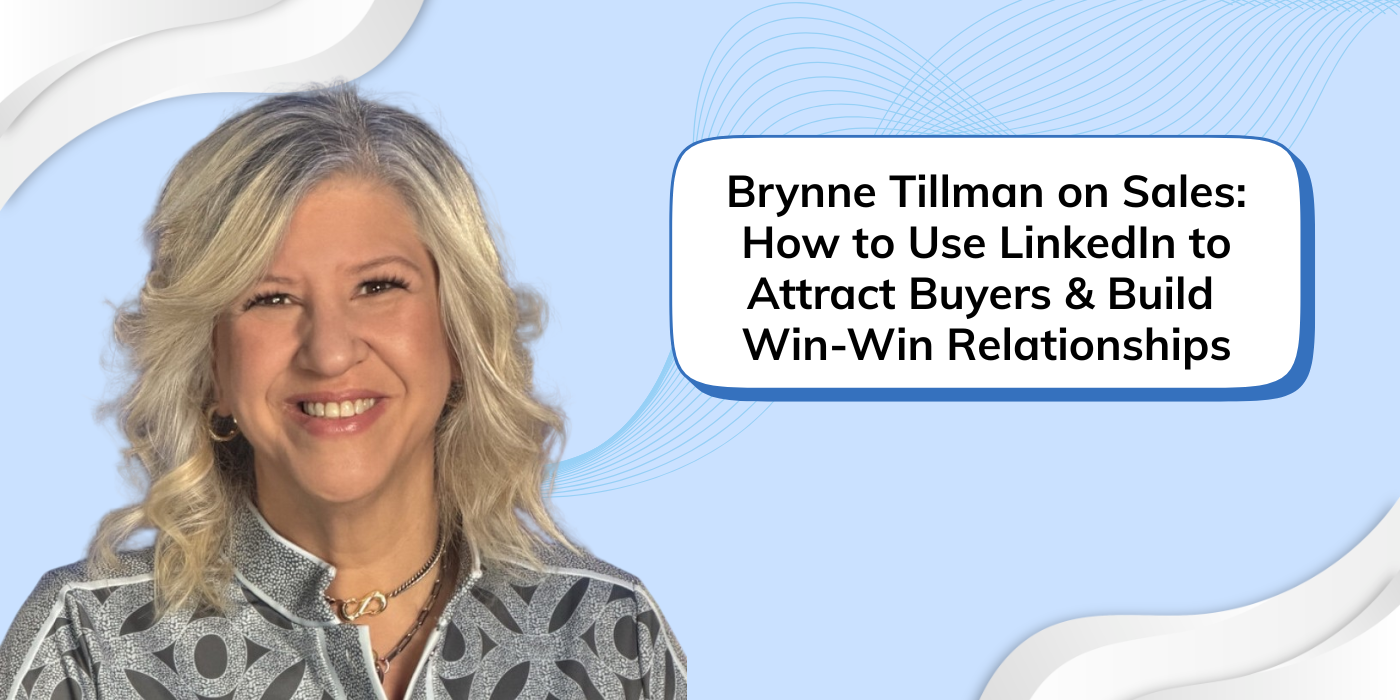
Most salespeople are using LinkedIn the wrong way - and it's costing them conversations they don't even know they're missing.
Brynne Tillman - the LinkedIn Whisperer, CEO of Social Sales Link, and author of the LinkedIn Sales Playbook - joined host Steve Benson on Outside Sales Talk to share a decade's worth of LinkedIn selling strategies that go far beyond posting content and hoping for the best. Brynne's philosophy is simple but powerful: social selling isn't about broadcasting - it's about showing up with empathy, being a genuine resource, and staying in front of the right people so that when they're ready to buy, you're already the person they trust.
Here are the biggest Brynne Tillman sales insights distilled from the interview - listen to the full Outside Sales Talk episode LinkedIn Selling Tips and Tricks That Get Big Payoffs with Brynne Tillman or find it on Apple Podcasts, Spotify, Pandora, and YouTube.
Brynne Tillman Insight #1 - How to Transform Your LinkedIn Profile from Resume to Resource
"One of the biggest mistakes salespeople make is they use it as their brag book or their resume. We need to leverage the tool in a way that gets hands raised. Everything we do on social, starting with our profile, needs to work toward that goal."
Your LinkedIn profile is the hub that every other LinkedIn activity flows back to. Whether a prospect finds you through content, a warm introduction, or a search, they will visit your profile - and what they find there will determine whether the conversation happens or doesn't. Most salespeople waste this moment by leading with their own story instead of the buyer's problem.
- Your headline has one job: Get buyers to keep reading. Brynne's formula: who you help, how you help them, and the impact you make. For field sales, that might look like: "We help outside sales professionals organize their day so they can see more clients in less time and close more business." That creates immediate curiosity - not a sales pitch.
- Your about section earns the right to the conversation: Don't open with your mission, passion, or years of experience. Open with the challenge your buyer is facing. Create curiosity first, then concern - show them how much they might be losing by not solving the problem. Then teach them something useful. Only after you've delivered real value do you earn the right to include a call to action.
- Your experience section is a product pitch, not a job application: Brynne's LinkedIn hack is to use the experience section to list what you sell rather than your career history. Each "position" becomes a deliverable - your product, service, or offering - described in a way that helps buyers understand what they can hire you to do for them.
Why This Works: Buyers who aren't actively shopping need a reason to care. A profile built around their challenges and your value - not your credentials - creates the curiosity and concern that starts a sales conversation. As Brynne puts it: "It's a little test drive." If the profile delivers value in five minutes, a phone call feels worth their time.
PRO RESOURCE: For more on using LinkedIn strategically to build your pipeline and personal brand, see Chris J Reed on Sales: Expert LinkedIn Tactics to Grow Your Pipeline and Build Your Brand.
Brynne Tillman Insight #2 - How to Master the Ask-Offer Ratio to Earn Every Conversation
"You have to master the ask-offer ratio. The better we do at compelling action - maybe just a like or comment - it moves us closer to a phone call. If they're compelled, they think it's great info and they reach out."
Every piece of content you share, every message you send, every interaction you have on LinkedIn is an implicit transaction - you're asking for someone's attention and time. Whether that exchange feels valuable or like a bait-and-switch determines everything that comes next. Brynne's ask-offer ratio framework is the lens through which every LinkedIn action should be evaluated.
- Give before you ask - every time: The content you share, the messages you send, and the interactions you initiate should all deliver genuine value before making any kind of request. "Stop focusing on hitting your goal - focus on helping your client hit theirs." When that's the genuine orientation behind every interaction, the ratio takes care of itself.
- Never send the link until they ask for it: When you want to share a piece of content with a prospect, tell them you have something relevant and ask if they'd like you to send it. Don't send it unprompted. "Don't send a link yet - keep them wanting more." Permission-based outreach removes the spam feeling entirely and creates a micro-commitment that moves the relationship forward.
- Earn the call the same way: The transition from online conversation to scheduled call follows the same logic. "I'm glad you got value from this. I have other insights I'd love to share, maybe specific to your company. If you're interested, let me know - I'm happy to schedule 15 minutes." You've delivered enough value that the call feels like a natural next step, not a sales pitch.
Why This Works: Nobody wants to be sold to - but everyone wants help. When every interaction you have on LinkedIn is genuinely oriented toward helping the other person, you build a reputation as a resource rather than a vendor. That reputation is what converts connections into conversations - and conversations into customers.
Brynne Tillman Insight #3 - How to Create and Curate Content That Actually Attracts Buyers
"You're having conversations about your products and services with new people every day - they ask questions, you provide answers. You're a genius at content, you're just not capturing it."
Most field salespeople assume content creation isn't for them - that's for marketing. Brynne dismantles that assumption completely. If you're talking to customers every day, you're already generating content. The only thing missing is the habit of capturing it.
- Curate what your buyers care about, not what you like: Spend an hour or two looking at what your top clients and target prospects are engaging with on LinkedIn - what they share, comment on, and like. Those sources and topics are your content roadmap. "Find content they're sharing that aligns with what you do." The goal is to be a resource for the world they care about, not a promoter of the world you sell in.
- Your daily sales conversations are content gold: When a prospect says "Wow, I never thought of it like that" or "I had no idea you could do that" - that's a post. Keep a journal. Write it down in the meeting. "You're the most prolific content producer in your company - you're just not capturing it."
- Original content doesn't have to be a blog post: A 20-second video from your car. A quote turned into a word cloud at wordart.com. Three sentences pulled from an old client email. A one-minute screen recording answering a common question. The medium doesn't matter - the insight does. Brynne's suggestion for field sales teams: interview your best customers on camera asking for one territory efficiency tip. You build relationships, generate content, and create a library that attracts the exact buyers you want - all at once.
Why This Works: Content that genuinely helps your target buyer think differently about their challenges positions you as a thought leader before you ever make a sales pitch. It does the top-of-funnel work for you around the clock - reaching people you'd never have time to call, warming up prospects who aren't ready yet, and keeping you top of mind with people who are already in your pipeline.
PRO RESOURCE: For more on building relationships through content and social engagement, see Matt Heinz on Sales: How Field Salespeople Can Master Social Selling to Build Relationships and Fill Their Pipeline.
Brynne Tillman Insight #4 - How to Engage Prospects Consistently Without Cold Pitching
"Every client and prospect I'm actively engaging - I bookmark their activity feed. When I'm ready to engage with all my clients and prospects, I highlight all those links, right-click, open in Chrome - 55 tabs open, all on my prospects' posts. I can engage with them once a week in under 20 minutes."
Consistency is the secret ingredient in LinkedIn relationship-building - and Brynne's bookmarking system is the most practical tool in the entire conversation for making that consistency effortless. Instead of hunting for prospects' activity every time, she's built a system that delivers it all in one place, ready to engage in under 20 minutes a week.
- Bookmark prospect activity feeds, not just profiles: Go to a prospect's profile, scroll to their activity section, click "posts" - that URL leads directly to their recent posts every time you visit. Drag it into a Chrome bookmark folder organized by prospect or client type. When you're ready to engage, open all of them at once and work through the tabs.
- Engage meaningfully, not just with a like: Read the post - or at least scan it carefully. Pull something specific that resonates and comment on it. Tag a colleague if it's relevant to them. Share it on your own feed with your perspective added. "If someone mentions another on my post, it's the biggest compliment - they want someone else to read it." These actions get noticed in ways a like never does.
- Use video messages to re-engage dormant connections: Export your connections, identify people you've never actually spoken to, and send them a short video message on mobile. "We've been connected for some time and never had a chance to know each other - thought I'd reach out and introduce myself. Video's a fun way to do it." Brynne reports high engagement because almost nobody else is doing it.
Why This Works: Staying consistently visible to the right people - without selling - is the foundation of social selling. By the time a prospect is ready to buy, you've been showing up in their world for months. You're not a cold call - you're a familiar, trusted voice. That changes the entire dynamic of the conversation when the moment arrives.
Brynne Tillman Insight #5 - How to Use Warm Referrals and the Name-Drop Strategy to Get More Meetings
"Ask permission to name-drop. 'Would it be okay if I mentioned you're my client and you thought it made sense for me to reach out?' They're like, 'Yeah, sure' - relieved I didn't ask for an intro. I reach out: 'Fred, Anne and I were chatting the other day - your name came up, and she thought I should introduce myself.'"
Cold outreach on LinkedIn is the most common - and least effective - approach Brynne sees. Her alternative isn't complicated, but it requires a mindset shift: instead of going cold to strangers, warm up every conversation through the network you already have.
- The name-drop beats the introduction request: Asking a client to make a formal introduction puts the work on them and often doesn't happen. Asking permission to drop their name takes five seconds to approve, keeps you in control of the outreach, and arrives with built-in credibility. Half of prospects will already know your name by the time you connect.
- Mine your clients' and partners' connections: Go to a client's profile, click their connections, then use LinkedIn's filter tool - select "second-degree connections," filter by "connections of" that person, add titles you're targeting, and hit apply. Eight hundred connections suddenly narrow to 23 relevant prospects. "Magic." Run those names by your client, get permission to name-drop, and reach out with instant context and credibility.
- Referral partners are an underused goldmine: Ask every client who their CRM rep, software vendor, or service partner is - then reach out directly. "Fred, we both work with Terry at ABC Company - I thought it made sense to introduce myself." Shared clients create immediate common ground, and partners are motivated to take the call because they share a stake in the client relationship.
Why This Works: A warm introduction - or even a name-drop - compresses the trust-building timeline dramatically. You're not starting from zero. You arrive with context, credibility, and a reason to talk that has nothing to do with selling. That's the difference between a referral that opens a door and a cold message that gets deleted.
PRO RESOURCE: For more on building a referral-driven pipeline that eliminates cold outreach, see Joanne Black Sales Strategies: How to Use Referral Selling to Never Cold Call Again.
Steve Benson Bonus - How to Turn Your Customers Into a Content Engine
"Have a quick call with a field rep client using Badger - not a testimonial, but 'Give me one time and territory efficiency tip.' Get a Zoom video under three minutes. Do it with 50 people - you're known for this content, not about Badger, but for sales reps or leaders wanting efficiency on the road."
Steve draws on Badger Maps' own content strategy to illustrate a principle that applies to any field sales team: your customers are the best content creators you have - most salespeople just haven't thought to ask.
- Interview customers for micro-content, not testimonials: A one-tip video from a respected client is more credible and more shareable than any marketing piece you'll produce in-house. It's authentic, it's specific, and it positions you as the connector of expertise in your space - not just a vendor.
- Build a library that attracts the right buyers: Fifty short videos from fifty different field sales professionals - each sharing one territory efficiency tip - creates a resource that your target buyer actually wants to consume. It also deepens your relationship with the fifty customers you asked.
- Your knowledge base is a content goldmine: At Badger Maps, the support team creates short screen-recorded videos answering common product questions. Usage rates are high, support time drops, and the videos live on as searchable resources. "Everyone should do that - put answers and value at people's fingertips, and they'll use it." The same approach works for any field sales team with a frequently asked question and a phone camera.
Why This Works: Content that comes from real customers doing real work in the field carries more weight than anything a marketing team can write. It attracts more of the same kinds of buyers, builds community around your brand, and keeps you top of mind - not as a seller, but as a resource. That's the kind of sales productivity that compounds over time.
Final Takeaways
Brynne Tillman's LinkedIn framework comes down to one governing principle: show up as a resource, not a salesperson. Rebuild your profile around your buyer's challenges. Curate and create content that helps them think differently. Engage consistently and meaningfully. Earn every conversation before you ask for it. And use the warm relationships you already have to open doors that cold outreach never will.
Start today by auditing your LinkedIn profile against Brynne's three-part formula - headline, about section, experience section. Ask yourself honestly: does this read like a resource or a resume? If it's the latter, that's your first action item. Everything else builds from there.
The leading app for field teams
Badger Maps is a routing & mapping app that automates data collection and uplevels field team performance. From planning your day to managing your territories, Badger optimizes every aspect of the field sales process.
90-day money back guarantee
No set up fees.


Looking for our logo?
Grab a Zip packed with our logo in PNG and EPS formats.